Argentina 101: What to Know About Argentina Before Coming
This is the best guide to Argentina. Here you’ll learn everything you need to know before you come to this South American country.

Argentina 101 is Important
It’s always good to get prepared before visiting a new country for the first time, and Argentina should be no different, from the small stuff to the big stuff. Let this blog post give you that boost of confidence you need to step off the plane and into Argentina, armed with these 36 bits of knowledge.
I spent 5 months in Buenos Aires when I was in my early 20’s. I loved Argentina so much that I went back 17 years later and spent an entire year traveling around the country, from the northern desert provinces to the southern Patagonian mountains, and everything in between. I went back again for 4 months in 2024.
My hope is to help you love Argentina as much as I do, which means providing information not only about fun activities in BA, but also the logistical things to help you have the most success in the country.
This blog post will assist with what to know about Argentina including the people, language, and culture of Argentina, including where to get a SIM card, the nuances of Argentine Castellano, money, food, etc.
Nicki on YouTube: Everything you need to know before coming to Argentina
Argentina Basics
If you’re wondering what to know about Argentina culture, I got you, boo! This section will cover the basics to help you prepare before arriving in Argentina.
It’s not illegal to overstay
One of the things you might not know about Argentina is that immigration is not that strict. In most countries around the world, overstaying your tourist visa or tourist allowance will land you in big trouble. Not in Argentina. It is not illegal to overstay your allotted 90 days. You simply have to pay a small fee before leaving the country and you’re good to go. I’ve written an entire blog post about this here.
E-Sim
Argentina uses E-sim cards which work like a regular sim card, but you don’t need the physical sim card to make it work. I use Airalo, which works in over 190 countries. If you purchase an Argentina E-sim through this link you’ll get $3 off your first purchase.
You can also get an E-sim at the Claro store which offers better local prices. I suggest using Airalo for your first day or two so that you have data right away. Once you have your bearings, pop over to the Claro store to get a free E-sim, and then load money at a kiosko (convenience store) nearby.
When I travel, I use a combination of Airalo, local SIM cards, and Google Voice to keep my US phone number.
Get the Ultimate 10-day Buenos Aires itinerary on the Thatch app
Argentina Outlets & Plugs
Argentina has two types of plugs: Style C & I. Plug C has two round pegs, like in Europe. Plug I has 3 flat pins in a triangle (it will work with the two flat diagonal pins as pictured here). Argentina uses a 220V supply voltage and 50Hz. Some apartments have both wall plug options, C & I. Some have only C, and some have only I.

This can be particularly frustrating at times, as you’ll need to travel with both. In the instances where only one type is available, you’ll be alternating charging your phone, your computer, etc. My advice is to get them before you come so you are prepared.
Retornable/Envase
This is a very useful Argentina 101 tip. Argentina uses a returnable recycling program. If you want to buy beer or soda, bring your previous bottle back to the shop to get the envase money back, but it must be the exact same size.
The brand doesn’t matter. You can only trade beer bottles for beer bottles, and soda bottles for soda bottles. No mixing drink types or sizes. Not every bottle is returnable in Argentina. This does not apply to wine bottles.

You’ll need to check the label to see if it says ‘retornable’ or not. Take your bottle to the front of the store where they will give you a ticket. Then go in the store, choose your new bottle, and when you go to pay, give them the retornable ticket. This also means you’ll need to save old bottles in your house and not throw them away.
People
If you’re wondering what to know about Argentinian people, the first thing to know is that Argentinian people are known to have the gift of gab. They will talk to you about anything anytime. This is one reason I love Argentina.
They are so open to anyone and ready for a conversation. While Porteños (people from Buenos Aires) get a bad reputation for being arrogant, I have not personally found that to be true. In general, Argentinians are very friendly, open, and warm people.
Going to Argentina soon? Get Ready at a glance:
Get travel medical insurance with SafetyWing.
Book your stay with Booking.com.
Check Flights with Skyscanner or Hopper.
Rent a car with RentalCars.com or Discover Cars.
Download the Airalo app and get an Argentine eSIM.
Purchase the Ultimate Buenos Aires guidebook.
See all my Argentina guides on the Thatch app.
Take a tour with GetYourGuide or Viator.
Have a 1:1 consultation with me in advance!
Websites for English in Argentina
If you don’t speak Spanish, you may be tempted to allow Google to translate to English for you. However, for whatever reason, websites don’t function the same in English as they do in Spanish.

Sometimes you won’t be able to submit forms. Sometimes the numbers are funky. The entire formatting is changed. I suggest translating to English to read the information, hit refresh, put it back in Spanish to take any actions on the site (submitting forms, making selections, etc).
Language in Argentina
Learning the language before traveling to any country is always a good rule of thumb, and Argentina is no different. Keep in mind that the Spanish you learned in school will most likely be different than in Argentina. Remember that making mistakes is part of the process. Do not let mistakes keep you from trying.
Vos v Tu/Usted
The Spanish in Argentina is not the Spanish you learned in high school where they taught you conjugations with “tu tienes el libro” and “usted vuelve al museo.” The “tu” (informal ‘you’) doesn’t really exist in Argentina. The more formal ‘you’ (usted) is also very rarely used except in extremely formal circumstances. Instead, may I present to you- vos! It’s the standard ‘you,’ and is conjugated differently.
Start with an infinitive of a verb, let’s say tener. Remove that ‘r,’ add an ‘s,’ and an accent over the last vowel, and voilà you’re speaking Argentine! Vos tenés mi libro? (Do you have my book?); Cuando volvís al museo? (When are you going back to the museum?)
Tener–> tene –> tenés
Same goes with the imperative. It’s not escuchame, it’s escucháme (listen to me). Vení. Hablá. Contá.
Ll/y/sh- pronunciation
In Spanish classes in the US, we learn that the double L sound (ll) is pronounced like a ‘y’ sound in English. Pollo = poyo (chicken). Calle = caye (street). Well, not in Argentina! Say goodbye to ‘y’ and hello to ‘sh.’ Pollo becomes posho. Calle becomes cashe. And why stop there!? The Argentine ‘y’ is also pronounced with the ‘sh,’ slightly ‘zh’ sound. You won’t be drinking Yerba Mate, you’ll be drinking Sherba Mate. You didn’t see the payaso (clown) at the circus, but the pashaso.
In the north, the “ll” and “y” sounds more like a ‘zh’ sound than an “sh.” My Salteño friends say “pozho” instead of “posho.” Each region in Argentina has a slightly different version of this pronunciation.
Come prepared with a few phrases
If you’re more advanced in your Spanish (or ‘castellano‘ as they say here) game, check out the Porteño Spanish app to brush up on local slang. If not, it’s always helpful to know how to say a few things before you arrive. Also, make sure you have a good translation app on the ready. DeepL is one of the best translation apps. Try to memorize at least 5-10 short phrases before you come. Here are a few to help you get started:
- Te pido – Can I get (Te pido un cafe con leche por favor – Can I get a coffee with milk please?)
- Cuanto Sale? – How much? (Cuanto sale esta remera? – How much does this T-shirt cost?)
- Dónde queda? – Where is? (Dónde queda la Casa Rosada? – Where is the Pink House?)
- Para llevar – Take away/to go (Te pido un cafa para llevar – Can I get a coffee to go?)
- Che, boludo*, como andás? – Hey, dude, what’s up?
- Me traes la cuenta, por fa? – Can you bring me the bill, please?
*Boludo should only be used amongst friends. It can be considered rude when used with strangers, or in formal settings.
Buenos Aires, Argentina
The Paris of South America
I personally think Argentina’s capital is the best city in the world. But one thing it is definitely not, is Paris. You’ll hear again and again that Buenos Aires (BA) is the Paris of South America. It’s just not. Please stop this lie from trending.

Sure, there are some old buildings in the micro-centro and San Telmo with green rusting roofs and old architecture. Both cities like coffee and croissants, even if their cafe cultures are totally different. But the similarities end there. See Buenos Aires for its uniqueness and wonder. No need to compare. Buenos Aires, Argentina is not Paris.
Read more: The Ultimate 10-Day Buenos Aires Itinerary
Give it Time
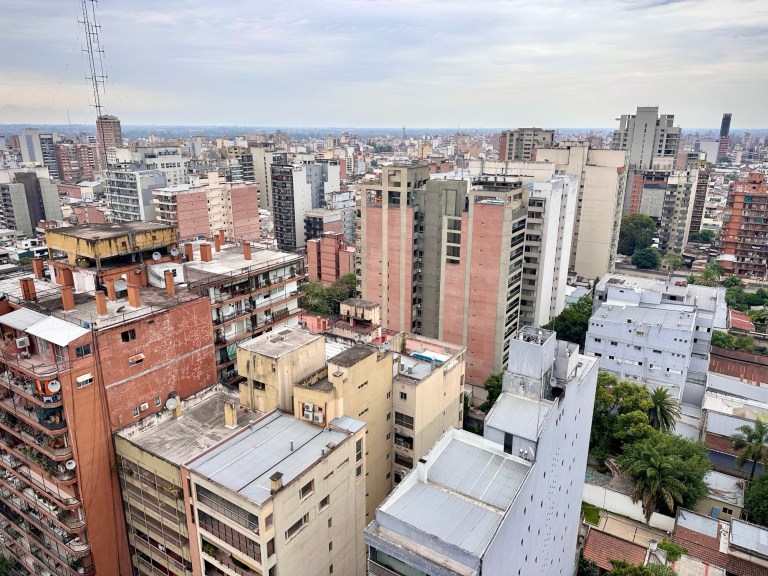
I’ve seen so many people use Buenos Aires as a quick stopover before visiting Argentina’s incredible nature like Iguazu Falls, Mendoza, or Bariloche. But it deserves more than that. This is a massive city with 48 distinct neighborhoods. If you have the time, give this capital city at least a week. Two if you can. The more the better. It’s a city full of massive parks, museums, nightlife, cafes, markets, and so many free things to do in Buenos Aires. And don’t just stay in the city limits. Head to the suburbs too. Tigre. San Isidro. La Plata.
Looking for tours to Buenos Aires suburbs?
Take a tour around the Tigre Delta or to the stylish San Isidro neighborhood.
Transportation
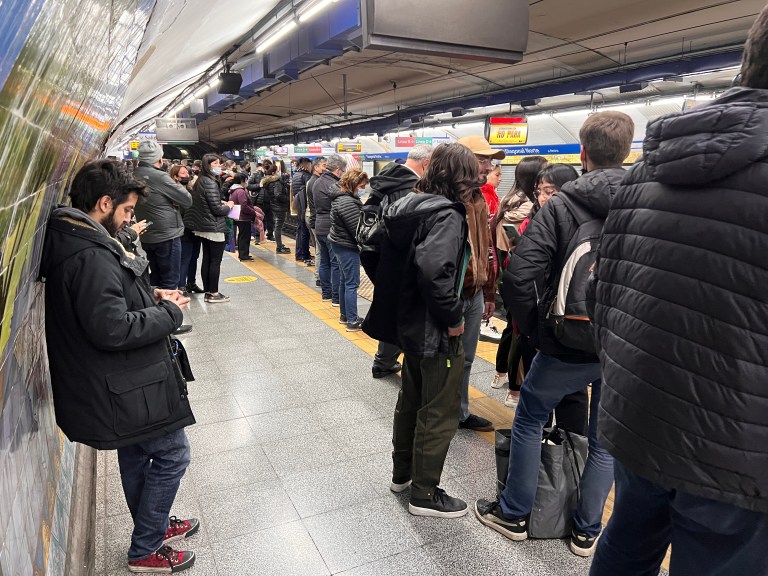
Buenos Aires is incredibly walkable, and you can easily get in your daily steps. It’s also a massive city and walking from one side to the other would take several hours. Fortunately, BA has fantastic transportation. Get yourself a Sube Card, load some cash onto it, and use it to take the subte (metro), bus system, and train lines. This city makes it very easy to move around.

If you’re in BA for a short time as a tourist and want to see as much as possible, consider signing up for a HopOn/HopOff bus tour.
The only downside? There is no train to the airport. You’ll need to take a taxi for that. Uber works, as do the following taxi apps: BA Taxi, DiDi, Cabify. You can also take city bus #8 between Ezeiza International Airport and the city center. You can also hire an airport transfer.
I personally prefer to hire a private driver between Ezeiza Airport and Buenos Aires. Emilio is the best. His number is: +54-911-5905-8226. If you’re looking for a driver, send Emilio a WhatsApp message and let him know Nicki sent you over.
Freudville
Here is a fun fact about Argentina: Buenos Aires leads the world in psychologists per capita. These psychology offices are all concentrated in one main area of the city, hence the nickname Villa Freud, which is around the Plaza Guemes in Palermo.
Dogs and Dog-walkers
Never have I ever seen so many dog-walkers in one place. It’s incredible, and quite the sight to see. They are more prevalent in the neighborhoods of Belgrano, Palermo, and Recoleta. It is one person and up to what seems like 20 dogs all connected and moving like one big organism.

On the topic of dogs, you really don’t see a lot of stray dogs in the city, but you do see a lot of dogs off their leash. A lot of cafes and restaurants even allow dogs inside so you might see them roaming around unattended. Be prepared for this if you are not a dog-person.
Safety
People love to talk about how dangerous Argentina and Buenos Aires are. My taxi driver from the airport lectured me for 40 minutes about how to hide my phone in my sock. Of course, anything can happen, this is a big city, just like any other major city. Be smart, be aware, and you’ll be okay. My phone did get stolen out of my hands in Buenos Aires, but hopefully you can learn from my mistakes and protect yourself.
Read More: Buenos Aires Travel Tips
Money in Argentina
The Exchange Rate
Argentina is one of just a few countries in the world with two exchange rates. I wrote a whole blog post about it here. There is the official/red rate and the unofficial blue rate. The exchange rates change rapidly every week in Argentina. The higher the blue rate, the worse it is for local Argentinians making pesos, and the better it is for foreigners bringing in dollars.
As of June 2024, the official rate is 927 pesos = $1, and the blue rate is 1365 pesos = $1. By the time you’re reading this, I’m positive it will be drastically higher. These rates fluctuate often. Sometimes the blue rate doubles the official rate, and sometimes there is a difference of only 200 pesos.

Western Union
Never had I ever used a Western Union in my entire life until I came to Argentina in January 2022. There are a few other ways to get yourself the blue dollar exchange rate, but using the Western Union is hands down the safest and easiest way to go in Argentina. If you use your debit card to get money from the atm, you’ll get charged the red rate. As of December 2022, many international credit cards started to offer the blue rate exchange. Speak to your bank first to confirm this is true for you.
Transfer yourself money from the Western Union and get the best rate around! If you create a Western Union account using this link, and send yourself more than $100 within 30 days, you’ll get a $20 Amazon gift card. Yay for free money!

All About That Cash, Baby
Because you want the best rate, you’ll find yourself paying in cash most places. This is so disappointing if you’re someone like me who loves getting airline points from using my credit card.
It can be tricky living in a cash-only culture. I never know how much money is too much (what if I get robbed?), and how little is too little (what if I decide to eat out spontaneously?). It definitely takes some time to adjust to what you feel comfortable carrying around, and thinking about your day in advance, so you make sure to bring enough cash.
[UPDATE: As of mid December 2022, foreign tourists can now use their foreign credit card in Argentina (Visa and Mastercard only), and receive the ‘tourist dollar,’ which is slightly less than the blue rate. It is still unclear whether you will receive this rate making online purchases or if it’s strictly for in-person transactions using a credit card.]
No Price, Two Prices, and Cuotas
It can be really frustrating sometimes when you’re shopping in Argentina. So many things in so many stores just simply don’t have a price. You have to ask a store attendant how much every single thing costs. This can be especially overwhelming for foreigners who don’t feel comfortable speaking Spanish.
There are oftentimes I just don’t buy something because I’m not in the mood to ask for the price. One of the reasons so many stores don’t have prices listed is that they offer discounts for paying in cash (and inflation causes fast-moving price changes). So first you have to ask how much something costs. Then they’ll ask if you’re paying with a card or cash (efectivo), and will give you the price accordingly. Another reason for this is because prices change so quickly that it’s hard to keep up.
You’ll also notice that many stores offer prices in cuotas. That allows a buyer (only Argentinian with a DNI) to pay for something in several installments. Sometimes with interest, and sometimes without.
Exact Change
Argentine shops love when you pay in exact change. Sometimes they’ll even go out of their way to thank you for it. Sometimes they’ll even give you a discount if you don’t have exact change. For example, if my vegetables cost 350 pesos, and I only have 340 pesos or 360 pesos, they will gladly charge me just 340 pesos so they don’t have to give me change.
Vendors will often be visibly annoyed if you offer to pay a small amount with a large bill. Taxi drivers will even refuse to give you change at all, stating they don’t have it, and force you to pay that high amount. Try to always carry small bills whenever possible.
Tipping
Leaving a 10% tip is customary in Argentina when dining in a restaurant or cafe. It is not customary to tip taxi drivers, laser hair removal technicians, hair stylists, nail technicians, or bartenders. Nobody would refuse the tip, and they would be grateful for it, but it is not standard practice.
Argentina Food and Drink
This section will cover what to know about Argentina food: what to eat, what to drink, and when to do it.
Meals & Meal Times
In Argentina, there are 4 meals: breakfast, lunch, merienda, and dinner. You can eat breakfast whenever you want. Some people just have yerba mate in the morning. Others will have a cafe con leche with media lunas (croissants).
Lunch is generally later than we eat in North America. A standard lunch time is around 2pm. If it’s on the weekend with friends or family, it will last several hours. Merienda, which literally means snack, is a meal that occurs around 6-7pm. It can be anything from cafe con leche with media lunas, a beer, or a small sandwich. You’ll notice in many restaurants that breakfast and merienda share the same menu section, as the amount and variety of food is very similar.
Dinner is the meal that is the most difficult for me to adjust to. A standard dinner time would be anywhere from 9-10:30pm. Argentinians want to eat dinner at the exact same time I would like to be going to bed. Argentines do things late. Dinner at 11pm, drinks after, and dancing until 7am.
What To Eat

Argentina is a melting pot of cultures, with major influences from Spain & Italy. This is also reflected in Argentinian food. Pizza and Pasta dishes are very common in Argentina. Of course one of the most well known Argentine foods is the lovely empanada.
Argentina is also known for its high quality meat. Try to find yourself a parrilla (grilll) restaurant and have a very delicious, very affordable steak. Don’t forget to add chimichurri on top. Get yourself a side of provoletta, which is a gooey cheese. For desert, try dulce de leche, or an alfajor.
SIGN UP NOW for an empanadas cooking class HERE
Nachos
Nachos in Argentina are just chips. If you want Tex Mex nachos that you know and love, you’ll need to order “nachos con cheddar.” You have to ask very specifically to add cheese to your nachos if you don’t want to end up with a dry pile of chips.

Restaurants
There will very rarely be a hostess in an Argentine restaurant. Just walk in and seat yourself. The server will then bring you over a menu. Since the pandemic, they generally just bring you a QR code to scan, and then you can peruse the menu online.
Servers in Argentina are much less annoying than in the US; they won’t ask if everything is okay, or if you need anything every couple minutes. If you need something, get their attention and ask for it. They also won’t drop the bill at the table when they think you should leave. You can stay as long as you want. You can ask for the bill (la cuenta) when you’re ready to go.
Condiments

I love salt, and like to add a little bit to my meals to spice things up a bit. Especially because Argentina food is, well, a bit bland, and lacks spice (except up north). But as it turns out, it is actually against the law to put salt containers on tables in the capital city. You can always ask for salt, but it won’t be given freely. Also, sugar will be served in individual packets, and not in an open dish.
Fernet & Coca

Fernet is an alcohol originally from Italy, but popularized in Argentina. Fernet is most commonly drunk with Coca Cola in Argentina. The myth is that this magical combination of Fernet & Coca was first invented in Cordoba; it does seem to be more popular there than any other province.
Water
Talking about tap water always brings a lot of drama in Argentina. Some locals say it’s fine to drink. Others say it’s fine but tastes bad. Others say to avoid tap water at all costs. I generally buy large 7L water containers and drink from that during the week. I only drink tap water if I run out, but it has never made me sick. Expect to pay for water at restaurants, which is actually pretty common in most countries outside of the US. If you ask for water, a waiter will bring you a water bottle, unless you very specifically ask for water from the tap.
Yerba Mate
One of the things that Argentina is known for is the super caffeinated herbal tea, yerba mate. You will see Argentines all around the country carrying a thermos with them, even on hot days, to feed their mate addiction. Yerba mate is a loose-leaf tea, added into a gourd, and drank with a silver straw (called a bombilla). Never stir your mate. Once you add the bombilla, leave it alone. Then add hot water (but not boiling) on top of the mate and drink.
Business and Shopping in Argentina
Opening Times
Most businesses are closed on Sundays. The streets are dead. Don’t expect to be productive on a Sunday. Also don’t expect restaurants and shops to open according to their posted hours, or the hours listed on Google. They’ll open when they want, and close when they want. Sometimes they will take siesta from 2-5pm, and sometimes they won’t. If a cafe says they open at 9am, it is very likely you’ll be waiting outside the doors until 9:30. If a shop says they close at 10pm, get there by 9.

Mercado Libre
Get it out of your mind right now that you’ll be ordering things from Amazon. You will not. There is no Amazon in Argentina. However, they do have Mercado Libre, which is very similar to Amazon. You can find pretty much anything on there from a broom to a temporary housing rental. The items are often delivered very quickly as well- same day or next day.
The kicker? You can’t have a Mercado Libre account as a foreigner without a DNI (national ID number). If you need something delivered, ask a local friend to order for you, and pay them cash.
Whatsapp is not just for texting memes to your friends. It’s also how you book nail appointments, get your PCR test results, or contact a shop owner. It’s how you book accommodation and order sushi delivery. Whatsapp is used for everything in Argentina, especially in business. This is actually very handy. Many business will have their whatsapp number listed on the front door, on their website, and even on Google.
Travel in Argentina
Tourism in Argentina
I’ll be honest, it can be very hard to travel in Argentina. Worth it. But hard. The main reason is because of inflation and the need to pay for everything in cash. Also, a lot of things are impossible to reserve online without a DNI. So even if you were comfortable paying with your credit card, you still might not be able to without having that DNI. I wish the Argentine Tourism Board would hire me as a consultant. I have lots of ideas to improve things.
Bus Travel
It is not always easy to find bus schedules online, which can be really frustrating. I have found that the best thing to do is go directly to the bus terminal, look at all the schedules taped to the window of each bus company, and then buy directly from them in cash. This can be quite time consuming to go all the way to the station to buy tickets first. But with the lack of information online, it’s the best way. The most helpful website I found for bus travel in Argentina is BusBud.
Plane Travel
The best places to search for domestic flights are Flybondi and Jetsmart. If you purchase your flight online using your credit card, you’ll get charged the red rate. Therefore, you should select the RapiPago option. Generally this will give you a special code and a time limit. Then with your code, you can visit a RapiPago location (they’re all over the city), and pay for your flight in cash.
Traffic & Signs
Sometimes the street signs are on the side of the buildings. Sometimes they are not. Why Argentina likes to label some streets but not others will always remain a mystery to me. Another mystery? Traffic laws. Most 4-way intersections do not have either traffic lights or stop signs (apart from the main avenues). Technically the rule is that the car on the right goes first, but there always seems to be a mess at intersections when two cars arrive at the same time.
Adding to the confusion is the addition of pedestrians. There are no walk signals (apart from main avenues in BA) so it is always unclear whose turn it is to go and who has the right of way. As a pedestrian, this is confusing because it feels like cars don’t stop for you. When you’re in a car, it is confusing because it feels like pedestrians just pop up out of nowhere and stand in the middle of the street. Just to make bigger jumble of everything, Google Maps never correctly tells you which way you’re going, or where you’re facing. It takes some time to orient yourself after exiting an unfamiliar subte station.
Argentina 101 Final Thoughts
Everything mentioned in this blog post can be learned over time spent in the country. However, I aim to help you get a headstart before you go, so you can start your journey with confidence. I hope with this list about what to know about Argentina, you’ll not only save money and travel safely, but also have the trip of a lifetime.
Pin the photos below to Pinterest for future reference:


TRAVELING SOON?
INSURANCE: Cover yourself with travel medical insurance by SafetyWing.
FLIGHTS: Get the best flight deals with Skyscanner and set flight alerts with Hopper.
STAYS: Check out hotels and apartments with Booking.com and Vrbo.
RENTAL CARS: Get the best deal on rental cars with Discover Cars or RentalCars.
GOING HIKING? Get a 30% discount off your yearly AllTrails+ Account (code: nickiposts30)
eSIM: Get an international eSim with Airalo.
CITY GUIDES: Save time and purchase pre-made city guides with Thatch.
CITY TOURS: Book your tour with GetYourGuide and Viator
LUGGAGE: Get the best carry-on suitcase here.
CREDIT CARD: Start earning travel points with the best travel credit card.
BUENOS AIRES GUIDE: Purchase my Buenos Aires travel companion here.
CONSULTATION: Book a 1:1 travel consultation with Nicki here.
SUBSCRIBE: Get the Nicki Posts Travel Stuff newsletter every month.
TRAVEL BETTER: Check out my Travel Tips and best Travel Resources pages.
MORE? Check out more on my LINKS page to find me in more places!




You must be logged in to post a comment.