Louage in Tunisia: The Best Way to Travel
This louage guide will help you navigate the best public transportation available in Tunisia, so you can take your first ride with confidence.

I spent two months traveling around Tunisia. I rented a car, I took the train, I hailed taxis, and ordered Bolts. But the best way I found to travel around was to take the loauge in Tunisia.
When you arrive in a new country, taking a new, more local form of transport can feel overwhelming, and even scary. Especially the first time you try it. I know because I was really nervous entering my first louage station in Sousse. But after that, I became a pro. I took dozens of louages all around Tunisia, and I really came to enjoy it.
In this blog post, I’ll explain what a louage is, why you should try it, where to find the louage stations, and more. I’ve even provided a list of the main louage stations throughout Tunisia, so you don’t have to waste your time trying to figure out where they are. So if you’re wondering how to travel in Tunisia, you’ve come to the right place.
Read More: The Ultimate 10-day Tunisian Road Trip Itinerary

Read More: 21 Things to Know Before Visiting Tunisia
What is the main transportation in Tunisia?
The main means of transportation in Tunisia is a private car. Many of my Tunisian friends stressed the importance of needing a car to move around Tunisia. However, that is much easier when you live here, and much harder when you are coming to the country for a short period.
Renting a car and driving in Tunisia for prolonged periods can become very expensive. I rented a car for one week to do a road trip around Tunisia with a couple of friends. But beyond that, I used mainly louages to travel around Tunisia.
After a private car, the most common form of public transport is the louage. I did a lot of traveling via louage and I’m happy to share my experiences here with you.
What is a louage?
A louage is a shared taxi. The literal translation and louage meaning in French is “rental.” You are essentially ‘renting’ a spot in a shared van for an hour or two.
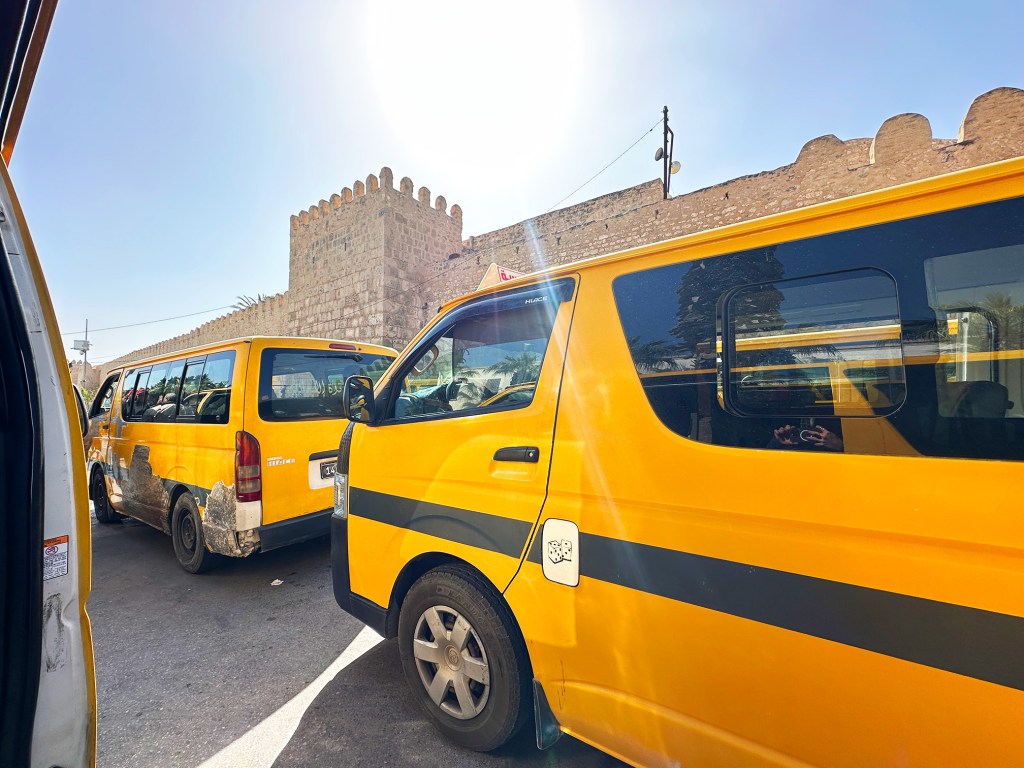
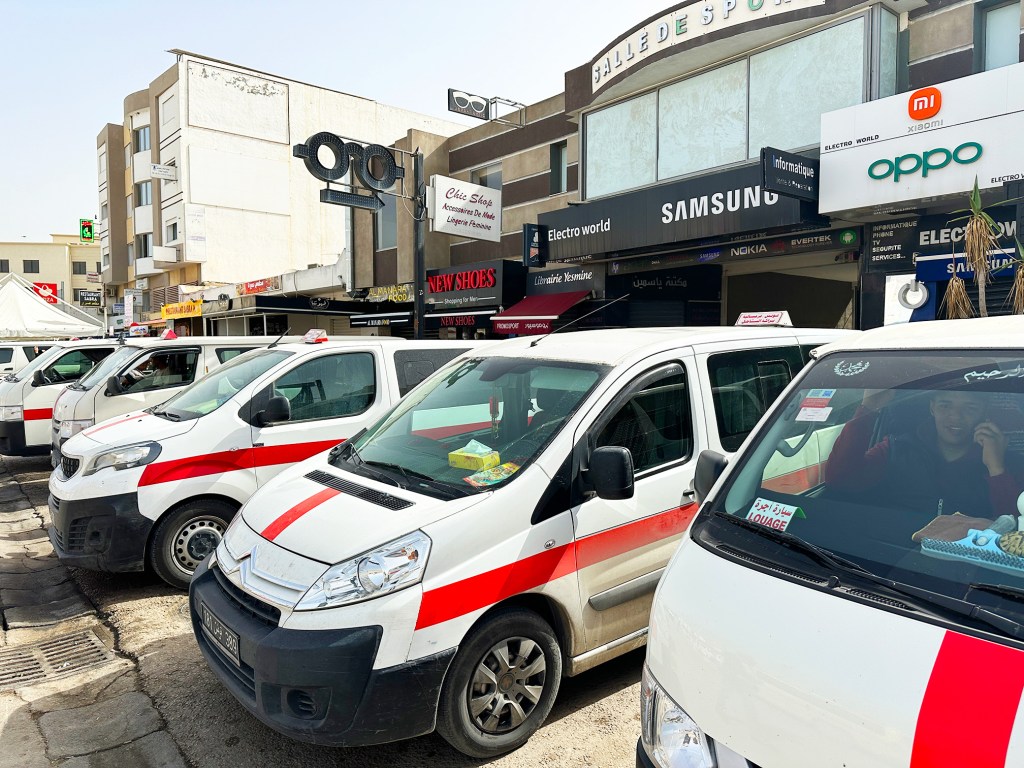
Louages are vans that bring you from one Tunisian city to another. Most louages are white with a red stripe, though some of the more local louages are yellow.
To begin your louage journey, you need to first go to the correct station in the city, buy a ticket, and then get in and wait until it’s full of passengers. The trains and buses in this country are not that reliable, but you can be sure that there is always a way to reach any Tunisian city in a louage. Louages are also affordable, which allows anyone to get where they need to go.
Read More: 31 Things to Do in Tunisia
Louage in Tunisia: Is it safe?
I have taken dozens of louages in Tunisia, and I’ve never had any major issues. I got from point A to point B with all my items still with me, and no traffic accidents.
That said, you should always be aware of your surroundings and your possessions. The bigger louage stations can be hectic, with a ton of people around. As a tourist, you will probably stand out more than the locals, so more eyes are on you.
Some of my local Tunisian friends swear they will never take a louage because it is dangerous. I understand their point, as many louage drivers do drive pretty fast. It seems the drivers have taken the same route so many times and know it so well, and they want to get it over with as quickly as possible.
For all the times I’ve taken a louage in Tunisia, the van I was riding in was never in an accident. The only time something happened was on the journey from Sousse to Tunis. Our driver tried to go around a car in front of us who wouldn’t let him. That driver in front forced us to pull over and then they yelled at each other. But that was it.
So overall, I would say that yes, taking a louage in Tunisia is safe. I have done it tons of times and I always felt very comfortable.
Tips for taking a louage in Tunisia
After taking dozens of louages in Tunisia, here are a few tips I can suggest:
- Be friendly but firm. You don’t need to tell everyone who asks where you’re going.
- Try not to look lost. Walk with a purpose.
- Have cash ready to go in your pocket. Don’t take out your wallet.
- Bring headphones for the ride.
- Try to sit in front if you get car sick (only the very front seat has a seatbelt).
- Go to the bathroom before you ride. There are no stops.
- You can eat snacks on board but try to avoid it during Ramadan.
- Don’t bring lots of cash or valuables with you.
- You have to pay with cash.
- Try to avoid late-night louage rides.
- Learn a little French or Arabic to purchase your ticket.
- Take a taxi between the town and the loauge station if it’s far.
How much does a louage cost?
The cost of a louage depends on the distance you go. For example, if you are going for less than 30 minutes, the journey will cost less than 3 dinars (1 USD). The louage journey between Tunis and Sousse is just over 2 hours and costs 13 dinars (4 USD). An even longer journey, such as that from Sousse to Djerba takes 5 hours and costs 35 dinars (12 USD).
Regardless of where you go, the louage journey is bound to be very affordable.
Going to Tunisia soon? Get Ready at a glance:
Get travel medical insurance with SafeyWing.
Book your stay with Booking.com.
Check Flights with Skyscanner or Hopper.
Rent a car with RentalCars.com.
Download the Airalo app and get a Tunisian eSIM.
Take a tour with GetYourGuide or Viator.
Have a 1:1 consultation with me in advance!
Benefits of taking a louage in Tunisia
While many Tunisians might recommend you rent a car, there are actually several benefits to taking a louage. For one, it is extremely easy to do once you locate the loauge station. All stations are pretty consistent as well, so once you’ve taken a louage one time, you should feel comfortable going to any louage station across the country. This also allows you to interact with the locals, and experience a common part of Tunisian culture.
Another benefit to taking a louage is how cost-effective it is when compared to private taxis or car rentals. This makes budget travel around Tunisia very easy, as you can take several day trips without breaking the bank.
While trains and buses run on schedules, they are usually late, and you never know how long you’ll end up waiting. Louages don’t have a set schedule and depart as soon as the van fills up. This means that you never have to stress about arriving at a certain time, and there will always be transportation available.
Louage in Tunisia: better than buses and trains?
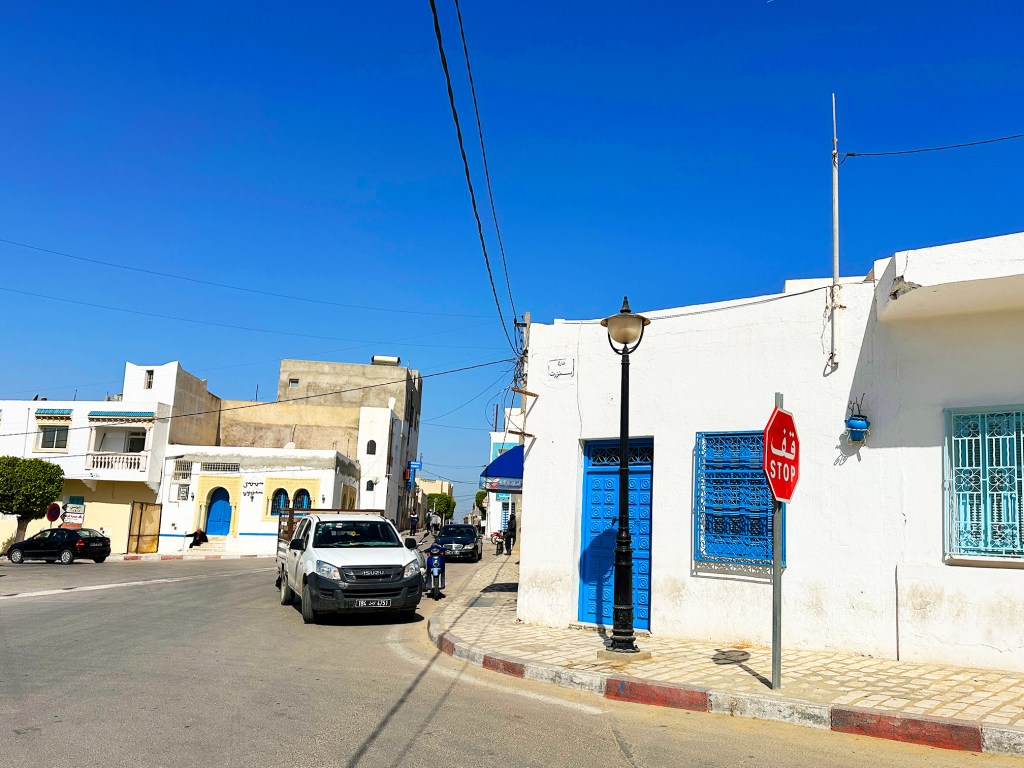
If you just need to get around within a city, the easiest way is to use Bolt in Tunisia. Bolt is a ridesharing app like Uber or Lyft. However, if you’re planning to travel between cities in Tunisia you can take a train, bus, or louage.
I didn’t take any buses in Tunisia, as I found it wasn’t that convenient. I did take a train between Tunis and Sousse, which was delayed by nearly one hour. I attempted to take the train again from Sousse back to Tunis, but after a 3-hour delay, the train was canceled and I ended up taking a louage. Tunisian train delays seem to be quite normal in this country.
Out of all the means of transportation in Tunisia, the louage is the best. It’s cheap, it’s easy, it’s reliable, and it’s dependable. If I had taken a louage instead of attempting to take the train from Sousse back to Tunis I would have saved several hours.
Where are the louage stations?
If you look to see if a Tunisian city has a louage station, you can simply put “louage” into Google Maps, and it should come up. However, some cities have multiple stations and sometimes they can be hard to find. Therefore, I have created below a list of the main stations in several of Tunisia’s main cities.
- Hammamet: Gare Routière Hammamet Tunis (a 15-minute taxi ride to the center)
- Hergla: In front of the Banque de Tunisie
- Kairouan: Station louage Kairouan (you can easily walk into town)
- Mahdia: Station Louage Mahdia (a 10-minute taxi ride to the medina)
- Monastir: Station Louage Monastir (edge of the medina, you can easily walk to center)
- Sfax: Alloajat station (go north and south) and Gare Routière Louages Sfax (to Tatouine)
- Sousse main station: Al Lawajat Station (a 5-minute taxi ride to the medina)
- Sousse local (go to Hergla): Gare routière BAB BHAR (next to the ribat)
- Tatouine (to Chenini and Ksar Ouled Soltane): Local Louage Station (center of town)
- Tatouine (to Tunis, Gabes, etc.): Station de transport Tataouine (north of town)
- Tunis (south locations): Station Louage Moncef Bey (near the Barcelona Train Station)
- Tunis (northern and NW locations): Station louage Bab Saadoun

Read More: Where to Stay in Tunis: Best Neighborhood Guide
How to take a louage in Tunisia
Now that you understand better what a louage is and why it is the best public transport in Tunisia, I will explain the step-by-step logistics for taking the louage.
1: Locate the louage station
The first step in the process is to find the louage station in the initial city. If you are in a city that is not in the list above, check Google Maps for ‘louage.’ Many cities have more than one louage station, so you should check with a local if you’re unsure about the correct station. There is often a ‘local’ station where yellow louages take you to nearby destinations, and a long-distance louage station for further destinations.
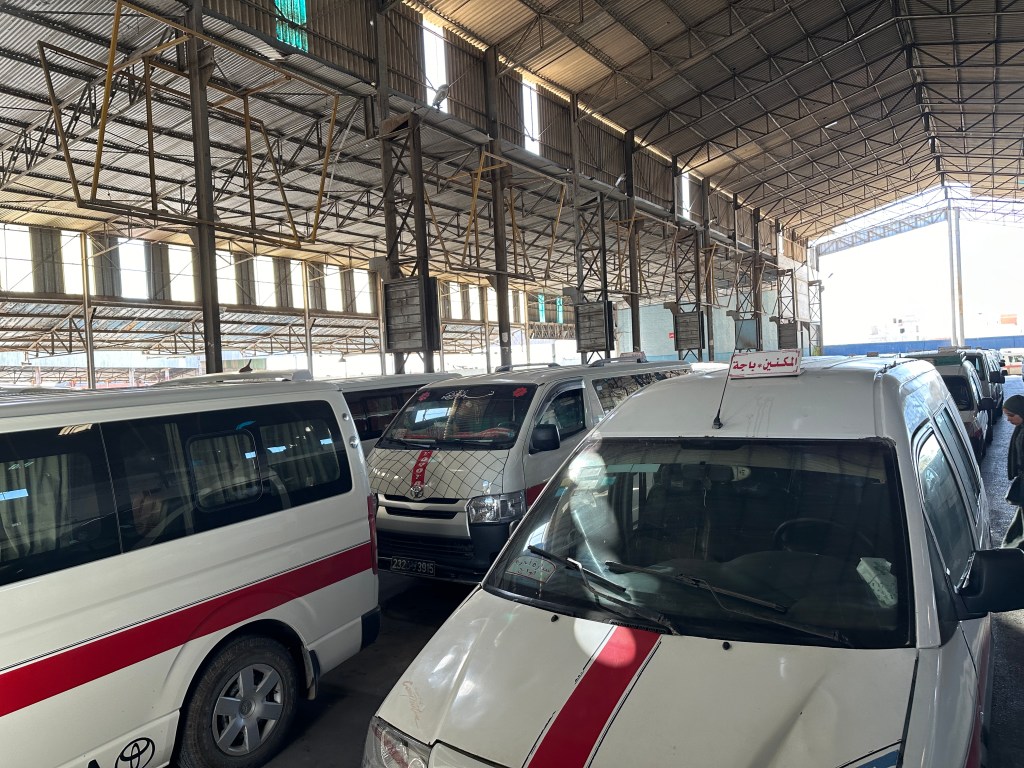
In smaller Tunisian towns, the louage station might just be a designated spot on the side of the road. Larger cities have defined structures. Inside it is organized chaos. To a foreigner, it might look hectic at first glance, but once you understand how it all works, it all makes sense. There are often a lot of people around moving in all directions.
2: Purchase a ticket
Every once in a while you’ll come across a louage where you pay the driver directly. This occurs in very small towns such as Hergla. However, purchasing a ticket directly from the ticket counter is more common. When you enter the station, a man will ask where you are going. When you tell him, he will point you to the correct window. Wait in line, tell the cashier your destination, and pay. The cashier will then give you a small white paper.
The same man who told you where to buy the ticket will likely approach you again and point to the correct van to get in. Give him your ticket and head towards the van.
Some stations have signs with the Roman alphabet so it is easy to see the name of your destination and the price of the journey. The main louage station in Sousse is really good about this. However, some stations only have the names of the destinations in Arabic, making it slightly more complicated. It is helpful if you can understand a little French or Arabic to understand numbers for the price.

3: Get in and wait
After you purchase your ticket, turn around and walk towards the vans. Someone will approach you to confirm where you’re going. Give them your ticket and get in the van they pointed to.
Most vans fit 8 passengers, sometimes 9. The front seat, next to the driver, is usually the only spot that has a seatbelt. If you get car sick, you should aim to sit here, though it is usually the first seat to fill up. Once you choose your seat in the van, you will wait until it fills up. When the van is full, the driver gets in and off you go.
The longest I’ve ever had to wait was 20 minutes going from Mahdia to Sousse. However, the wait was never more than 5-8 minutes most of the time, and often less than 3 minutes. It’s very efficient.
4: Enjoy the ride
Once the van takes off, it will unlikely stop for long breaks, so make sure you’ve gone to the bathroom before the journey begins. The drivers tend to go pretty fast so just be prepared for that. I usually bring earbuds and listen to podcasts on the journey, to distract myself from potential carsickness.
Sometimes the driver stops along the road to pick up random people if there is an extra spot available in the van. Sometimes people get off before the final stop as well.
5: Arrive in the new city
Generally, the vans go from the louage station in one city to the louage station in another city. However, if you would like to get off early, you can ask the driver who will usually grant your request.
Some louage stations are in the center of town, or right on the edge, making it easy to walk to your destination. Monastir and Kairouan, for example, have very convenient louage stations. However, some stations are a bit further away from the medina or town center, and you will need to get a taxi. For example, the loauge stations in Mahdia and Hammamet are both a bit far away from the action, so you’ll need to take a taxi from there.
Read more: More detailed info on each louage station in each city’s post:
What to see in Hergla
20 Things to Do in Hammamet
13 Things to Do in Kairouan
Visit Monastir
15 Things to Do in Mahdia
21 Things to Do in Sousse
25 Things to Do in Tunis
The Sousse Louage Station in Tunisia
Sousse is Tunisia’s third-largest city and tends to be the transfer point for many towns in the area. For this reason, the Sousse loauge station is one of the largest that I have seen in the entire country.
Even though it is large and crowded, it also tends to be one of the most organized stations. All the signs listing the destination cities are bright red with the names in both Roman and Arabic characters, with the prices marked very clearly.

You will likely make a stop in the Sousse louage station at some point, as it connects many different cities. For example, you are unlikely to find a direct loauge between Kairoun and El Jem, making a transfer at the Sousse station inevitable.
Below you can see the list of names and prices for all the destinations that this loauge station serves, which is a lot. The station is very large, so if you don’t see your destination listed when you first arrive, continue to the next window, or ask around and someone will point you in the right direction.


Final Thoughts on Taking a Louage in Tunisia
Taking a louage in Tunisia is the easiest, cheapest, and best way to travel in the country. There is always a van available, and you never have to wait too long before taking off. Not only is it affordable and reliable, but it’s also the best way to spend time around Tunisians, and travel like a local. Maybe you’ll even make some new friends.
Pin these photos to Pinterest for future reference.


TRAVELING SOON?
INSURANCE: Cover yourself with travel medical insurance by SafetyWing.
FLIGHTS: Get the best flight deals with Skyscanner and set flight alerts with Hopper.
STAYS: Check out hotels and apartments with Booking.com and Vrbo.
RENTAL CARS: Get the best deal on rental cars with Discover Cars or RentalCars.
GOING HIKING? Get a 30% discount off your yearly AllTrails+ Account (code: nickiposts30)
eSIM: Get an international eSim with Airalo.
CITY GUIDES: Save time and purchase pre-made city guides with Thatch.
CITY TOURS: Book your tour with GetYourGuide and Viator
LUGGAGE: Get the best carry-on suitcase here.
CREDIT CARD: Start earning travel points with the best travel credit card.
BUENOS AIRES GUIDE: Purchase my Buenos Aires travel companion here.
CONSULTATION: Book a 1:1 travel consultation with Nicki here.
SUBSCRIBE: Get the Nicki Posts Travel Stuff newsletter every month.
TRAVEL BETTER: Check out my Travel Tips and best Travel Resources pages.
MORE? Check out more on my LINKS page to find me in more places!


You must be logged in to post a comment.