13 Things to Do in Kairouan: Tunisia’s Holy City
Wander through the streets of Tunisia’s Holiest City and see its magnificent mosque and ancient history.

Even though it is quite a small city, with a population of 187,000 people, there are still plenty of things to do in Kairouan, making it a great day trip or a stop on your Tunisian road trip. Because it is the holiest city in Tunisia, there are several mosques to visit, including the most famous one, the Grand Mosque. You can spend several hours wandering through the Kairouan Medina and checking out the shops in the souk.
Kairouan is one of the most touristed cities in Tunisia. It comes in 4th for Tunisian tourist sites after Carthage, El Jem, and Bardo (where the mosaic museum is in Tunis).
Read More: Ultimate 1-Day Itinerary to Carthage Tunisia
I came to Kairouan during Ramadan 2024 on a day trip from Sousse. I visited the most well-known sights, and I’m ready to give you my honest impressions of each place. Some are overrated and honestly, not worth your time, while others are very impressive. While I was wandering around Kairouan, I met a local man who took me to a few unique places as well, that most tourists don’t know about. I’ll share those with you down below.
I saw several tourist groups walking around Kairouan as it is one of the most popular places to visit in Tunisia, but I did not see a single other solo traveler around town. But if you, like me, prefer to do your own thing, then this Kairouan guide is for you.
Read More: 21 Things to Know Before Visiting Tunisia
Is Kairouan a Holy City?
Kairouan is considered the holiest city in Tunisia. It is the 4th holiest city in the Muslim religion after Mecca, Medina, and Jerusalem. There are between 135 to 180 mosques in this small town. I was told that if you can’t afford to go to Mecca (one of the 5 pillars of Islam), you can go to Kairouan 7 times, which is considered equal.
What is Kairouan Known for?
Besides being the 4th holiest city in Islam, Kairouan has also gained fame for Indiana Jones, as well as a few famous treats.
Kairouan Carpets
Kairouan is famous for its carpets. There are many carpet factories and shops here. They say that all the carpets you can find around Tunisia were brought from Kairouan.
Famous Film in Kairouan
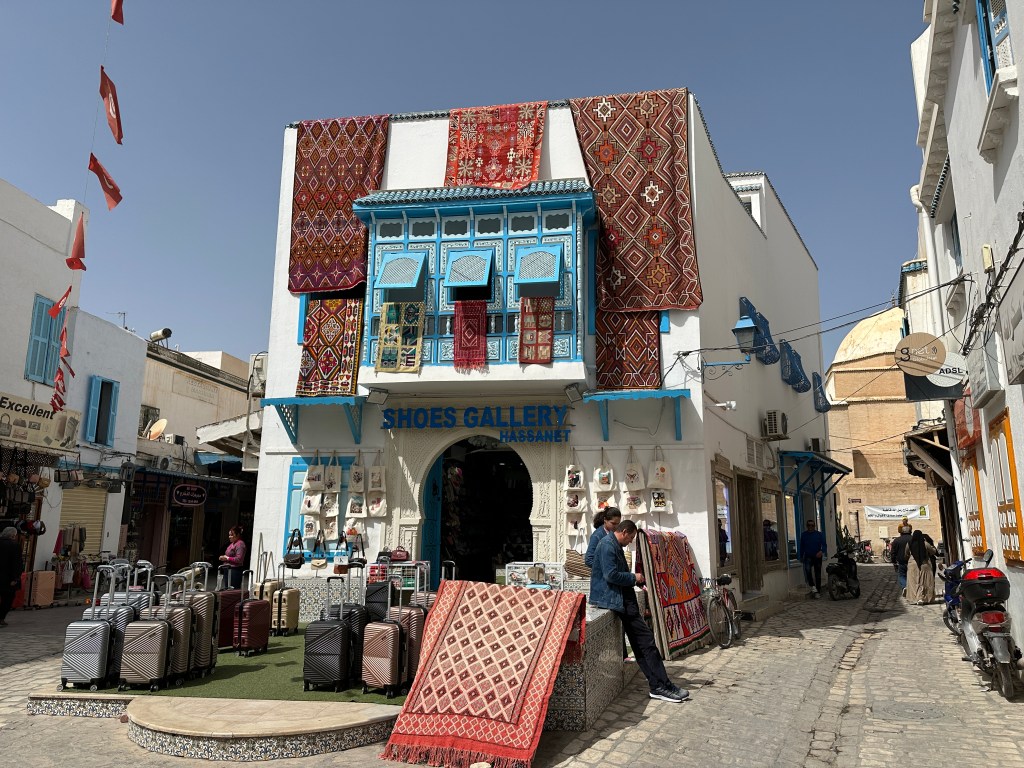
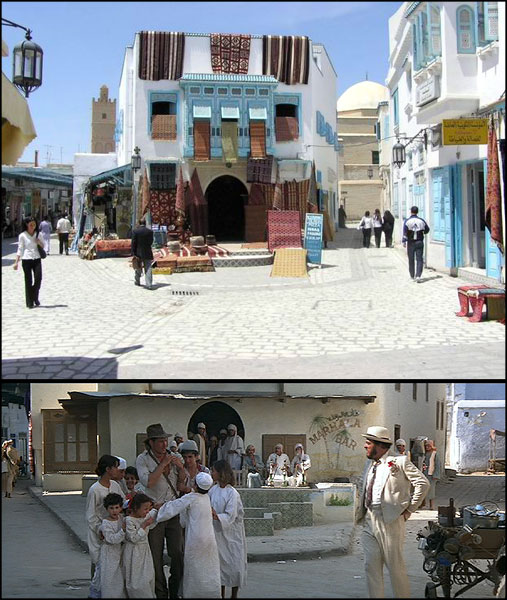
Indiana Jones Raiders of the Lost Ark was filmed in Kairouan. The scenes in the film shot in Kairouan were meant to portray Cairo, Egypt. I remember watching Indiana Jones as a kid, but I’m not an Indy nerd. This guy is though.
I got the photo on the right from his website. He created an entire side-by-side comparison of several shots and their current-day locations. When I asked a local about it, he brought me to the location below on the left and said that was the only filming location. But a deep dive on the internet will tell you differently.

Read More: 31 Things to Do in Tunisia
Famous Food in Kairouan
Many towns in Tunisia are known for a particular kind of traditional food. Kairoun is no different.


Kafteji Sandwich
The kafteji sandwich is one of Kairouan’s specialties. Unfortunately, I was in Kairouan during Ramadan so I wasn’t able to try it there, as all restaurants were closed during the day. The kafteji sandwich pictured above is from Tunis.
Makroudh
Makroudh is a Tunisian cookie made from dates, nuts, and almond paste. The dough is made with semolina and flour. There are various versions. Apparently, the cheaper ones are made with a sugar coating, and the more expensive ones are made with a honey coating. You can also find a white version makroudh (top right photo).
Ramadan Sweets
During Ramadan, you can find two special treats called Zlebia and Makharak. You make these sweets with honey and almonds. First, they deep fry the batter, and then dip it in honey. You can only find these during the month of Ramadan. You can see these sweets in the two photos above in the middle.
Read More: Guide to Tunisian Street Food
Who is Buried in Kairouan?
Part of the reason that Kairoun is considered to be so holy, is precisely because of who is buried here. One of those men is named Abu Zamaa, who was a close friend and barber, to the Prophet Mohammed.
Sidi Amor Abbada al-Ayari is also buried in Kairoun. You can read more information below, as he has a mausoleum dedicated to him in the city.
Where is Kairouan Located?
Kairoun is located 57km (1 hour) to the west of Sousse, and 160km (2 hours) south of Tunis. It is located in the Tunisian province of the same name- Kairouan.
When Should I visit Kairouan?
Because Kairouan is not a beach destination, the seasons are less important here than they are along the coast. March, April, October, and November are the months with the most pleasant weather. The summer months can get extremely warm, with temperatures reaching up to 38C/100F. The winter months don’t tend to get that cold, with high average temperatures around 17C/62F. In the evenings though, the temperatures will drop and you need a jacket.
If you go during Ramadan, the city will be a little more quiet than usual. Also, all of the restaurants will close so you won’t be able to eat lunch if you go on a day trip. Some restaurants will open again in the evening.
Read More: Tunisia’s 7 Best Beach Towns
Going to Tunisia soon? Get Ready at a glance:
Get travel medical insurance with SafeyWing.
Book your stay with Booking.com.
Check Flights with Skyscanner or Hopper.
Rent a car with RentalCars.com.
Download the Airalo app and get a Tunisian eSIM.
Take a tour with GetYourGuide or Viator.
Have a 1:1 consultation with me in advance!
What to See in Kairouan
1. Tourist Information Office
The Tourist Information Office is located along the inner Medina Wall on the north side of town, next to the Aghlabid basins. From the roof of the tourist office, you can see the Aghlabites Basins from above. There is no direct entrance/exit from the Tourist Information Office into the Basin area.


On your way up to the roof, you’ll encounter Abu Khalifa, who owns a shop on the second floor. Whether you want to or not, he’ll insist on taking you to the roof to tell you a few sentences about Kairouan. Then he will pressure you to enter his shop to purchase some overpriced oils or scarves.
When you enter the office, pass your bags through an X-ray machine. The people working at the front counter will ask you to purchase the Kairouan tourist ticket for 12 TND (4 USD). The price includes all of the following tourist attractions:
- Mausolée Sidi Abada (Mosque of the Sabres)
- Musée Rakkada (11km south of Kairouan)
- Bassins Aghlabites (Aghlabid Basins)
- Mausolée Sidi Abid (Mausoleum of Sidi Abid el Ghariani)
- Mausolée Abi Zâmaa (Mosque for Mohammed’s Barber)
- Mosque Okba (Grand Mosque)
You can purchase the ticket if you want, but I don’t think it’s necessary. I’m honestly not sure why they even offer it. The only place that asked for a ticket was the Grand Mosque (Mosque Okba), and you can purchase an individual ticket once you go there. However, the man at the Tourist Information Office will insist that it’s not possible to pay at each location individually.
2. Look at the Aghlabid Basins
The Aghlabid Basins were built in the 3rd Century to bring water down from the nearby mountains. There are two basins. Each basin has a large circle and a small circle. One of the circles is for purifying and cleansing the water, and the other one stores the water. From there, the water was sent via aqueducts to the town center.


The Aghlabid Basins are located just behind the Tourist Information Office, though you cannot enter the basin area from there. Also, the gates in the medina walls are all locked. You have to walk all the way around the wall to the next street in order to enter. Nobody asked for a ticket when I walked in. The Basins are a bit far from everything else to see in the town.
You can view the Aghlabid Basins from the roof of the Tourist Office or down below in the park. These 3rd Century Basins are inside a poorly maintained park with weeds everywhere. The water inside the basins is old, polluted, and full of trash. The Basins look exactly like the photos and there is no special feeling being here. I came here so you don’t have to.
3. Be in Awe of the Great Mosque of Kairouan
The Great Mosque of Kairouan, or Mosque Okba, is the main tourist attraction in town. If you purchased the ticket at the Tourist Office, they will stamp a hole on that site to note that you have visited. If you didn’t purchase the tourist ticket, you can buy an entrance ticket for 2 TND (0.60 USD). It is required for women to cover their arms and head. You can borrow a headscarf at the entrance if you need to.


This Kairouan Mosque was built in 670 CE by the Arab founder of the city, Uqba Ibn Nafi. It is considered the most ancient monument in the region and one of the oldest places of worship within the Islamic World. It served as a blueprint for other mosques in North Africa. A Berber man eventually killed Uqba Ibn Nafi, and the locals continued to take care of and renovate the mosque.
The mosque has a large inner courtyard. In the center of the courtyard, you will find a small set of stairs. At the top of those stairs, you can see the ancient sundial. Non-Muslims cannot enter the prayer hall, but they can observe it and take photos from outside. There are 600 marble columns inside the mosque. The minaret is 36 meters high.
4. Admire the Tiles at The Zaouia of Sidi Sahabi
The Zaouia of Sidi Sahabi is both a mosque and a mausoleum (for Mohammed’s barber). It is one of the tourist attractions on the Kairoun ticket, but nobody asked for a ticket when I entered. The Kairouan loauge station is just a two-minute walk from here.
It was completely free. You will first enter into a courtyard area. Then follow the path through a couple of hallways lined with beautiful tiles until you enter the inner courtyard. The entire perimeter of the inner courtyard is lined with porticos, carved with beautiful designs. The back walls are decorated with incredible tile scenes.


Abu Zama’a al-Balawi (also known as Sidi Sahib), was a close friend and personal barber of the Prophet Mohammed. He is considered to be the patron saint of Kairouan. Mohammed died in 632 CE. Sidi Sahib died in battle in 654 CE and was brought to be buried in Kairouan afterward. Legend has it that Sidi Sahib was found with 3 hairs of Mohammed’s beard in his pocket when he died.
5. Marvel at the façade of the Mosque of the Three Doors
The Mosque of the Three Doors is also known as Mosquée des Trois Portes in French and Djemaa Tleta Bibane in Arabic. Only Muslims can enter this mosque. I saw the mosque from the front, which is on the edge of a small plaza surrounded by carpet shops.

This mosque has historical importance, as it is one of the earliest examples of Islamic architecture showing an intricately carved façade, which is still intact. The mosque was originally built in the 9th century (866 CE), founded by Andalusian merchant Muhammad ibn Khayrun. The minaret of the mosque was added in 1440.
6. Zaouia Sidi Amor Abbada (Mosque of the Sabres)
This was another tourist attraction included in the Kairouan ticket, but nobody asked to see my ticket when I entered. This mosque/mausoleum closes at 1 pm on Fridays. During the summer and Ramadan, it is open from 8 am to 2 pm. In the winter it is open from 9 am to 4 pm.


Sidi Amor Al-Ayari, also known as Abada, was a local man from the Makthar area. While he was a blacksmith by trade, the townspeople also saw him as a very holy and religious man. He had strong criticisms against things like smoking and war, which are demonstrated by large sculptures in the front hallway. He designed and built this mosque in the mid-19th century. When he died in 1855, he was buried here. You can see his tomb inside, as pictured in the photo above.
7. Mausolée Sidi Abid el Ghariani
The mausoleum for Sidi Abid el Ghariani is also included in the Kairouan ticket. Unfortunately, I couldn’t enter because it was closed the day I visited Kairouan. This mausoleum closes at 1 pm on Fridays. During the summer and Ramadan, it is open from 8 am to 2 pm. In the winter it is open from 8 am to 3 pm. The photos I have seen of the inside of this mausoleum are beautiful, with tiled porticos and arches.

A local Kairouan man named Al-Jadidi began building this mosque in the 14th Century, but construction halted when he died during his pilgrimage to Mecca in 1384 CE. The mosque was then completed by his disciple, Abu Samir Abid el Ghariani, whom the present-day mosque is named after. Abu Samir Abid el Ghariani died in 1402 and was buried inside the mosque, making it the mausoleum it is today.
8. Wander the Kairouan Medina
The Kairouan Medina walls are 7km long and go around the center of the city. There are 2 sets of medina walls. If you look at a map of Kairoun, you’ll see two big circles that encapsulate the city. The majority of things to do in Kairouan take place in or near the inner city medina walls.
In many Tunisian cities, the medina is busy and full of movement and life. In Kairoun things are different. It is very calm and quiet. I visited during Ramadan, so I asked a local if it was that quiet because of this holy month. He said that the inner part of Kairouan is always that quiet. The section that lies between the two walls is much more active and busy.


The inner medina is more residential. You’ll see everyday life going on there. There are a few restaurants though they are closed during Ramadan. The section near the souk is the most active. I suggest wandering these quiet streets of the Medina though. It’s really peaceful and allows you to see how regular life is there. It is one of the best places to visit in Kairouan.
9. Go shopping in the Souk of Kairouan
You can find the souk, or the Kairouan market, inside the medina walls near the Bir Barrouta. It is the yellow section on Google Maps. There is both a covered and an open-air section of the market. Kairouan is famous for its carpets. All of the carpets you see around Tunisia are made in Kairouan. That said, I didn’t find the carpet prices any cheaper than other parts of Tunisia. If you’re visiting Kairouan, definitely take a stroll around the souk, especially if you’re hunting for a carpet.


10. Cimetière Musulman (Muslim Cemetery)
Muslims do not believe in cremation, therefore you will find many cemeteries around Tunisia. In this Kairouan cemetery, all of the headstones are painted bright white. The cemetery is located just outside of the inner medina walls. You can see the minaret of the Grand Mosque on the other side of the wall.

11. Find the Original Water Well at Bir Barouta
Legend states that a dog stumbled upon this exact spot and found water under the ground. This led to the founding of Kairouan in 670 CE. The Kairouan people used a camel as their pully system to bring up the water from the well. Kairouan is now a modern city with running water. So while that practice may have been used hundreds of years ago, it is no longer necessary. Yet, they still keep a camel inside this small room, walking in circles to impress tourists. I was not impressed. It made me feel uncomfortable. If tourists stop going, then maybe they’ll stop using camels.
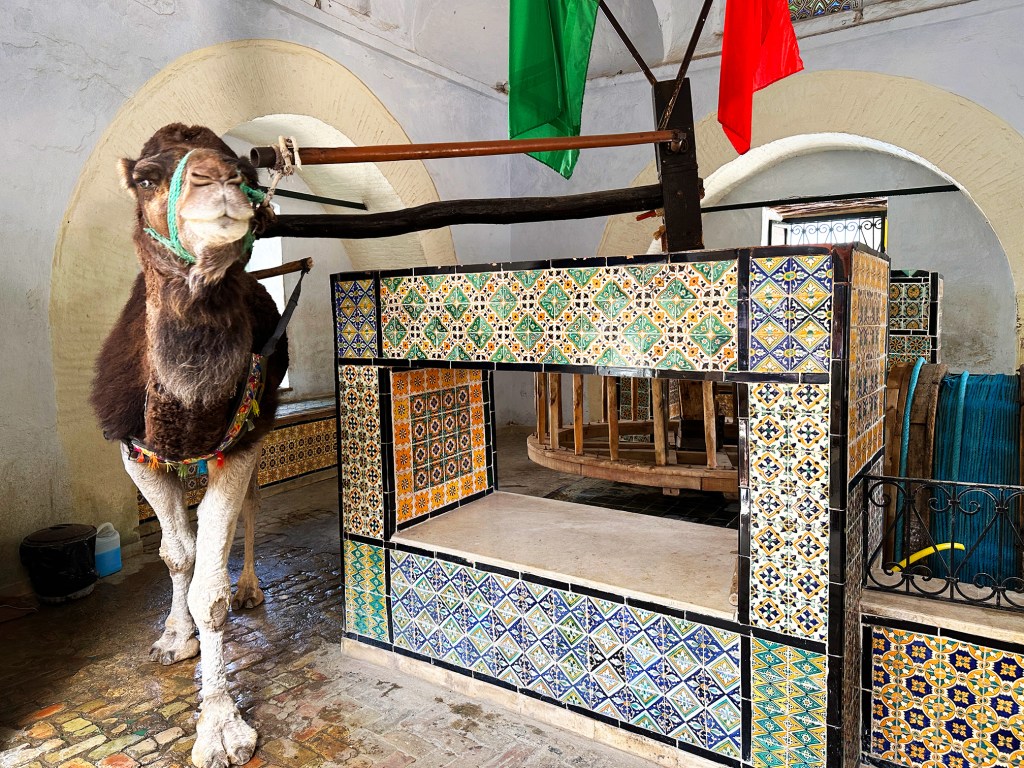
Not only that, but the man in charge of the camel expects you to leave a tip. My local friend told me that the camel man puts 10 or 20 TND in the tip jar to make you think other people left that amount, so you’ll do the same. Please, don’t go here and leave money as it encourages the camel practice to continue.
12. See Carpets in the House of the Governor
This home is now privately owned, but it was once the house of the governor of Kairouan. Currently, it serves as a carpet shop. You can enter for free to see the incredible tile work and Islamic architecture. There are tiles and carpets everywhere you look. It’s very beautiful. There are also women inside making carpets. They say that 1 square meter of carpet takes one month to make.


If you go in, you will be expected to sit through a pitch about buying expensive carpets. I heard there is a great rooftop here, but I was with a local friend I had met and he didn’t want us to go to the rooftop because he didn’t like how they tried pushing the carpets so much.
13. Visit the Copper Makers
Kairouan is the center for copper work. Any copper trays, napkin holders, coffee warmers, etc. made of copper that you see around Tunisia come from here. That said, the prices were not more affordable than what I have seen in other Tunisian markets around the country. But it was really cool to walk around and see the men both creating pieces from scratch, as well as cleaning up and polishing old bowls and dishes.
This is one of the more unique things to do in Kairouan. You can find this area on Boulevard Estate, near the Fabio kairouan clothing store.


Day Trips from Kairouan
Here are some great day trips to/from Kairouan, or inspirational Tunisian cities to add to your Tunisian road trip itinerary.
Sousse
You can easily visit Kairouan from Sousse (and vice versa). Sousse is just one hour east of Kairouan, along the coast. Sousse is Tunisia’s third largest city. It’s fully worth a day trip. If you’re basing yourself in Kairouan, you need to make a trip to visit Sousse at least once. Visit the Ribat, the Sousse Medina, the Dar Essid Museum, and more. You can take a louage to Sousse for 6.200 TND from the Kairouan louage station.


Read more: 21 Things to do in Sousse
Amphitheatre El Jem
El Jem is a Roman Amphitheatre still in relatively good shape. The entire front is still intact. You can climb to the third floor and look down on the center oval stage. You can also go underground in the tunnels beneath the oval stage. The cost to enter is 12 TND.


To reach El Jem from Kairouan (Station louage Kairouan), you need to change louages in Sousse.
Monastir
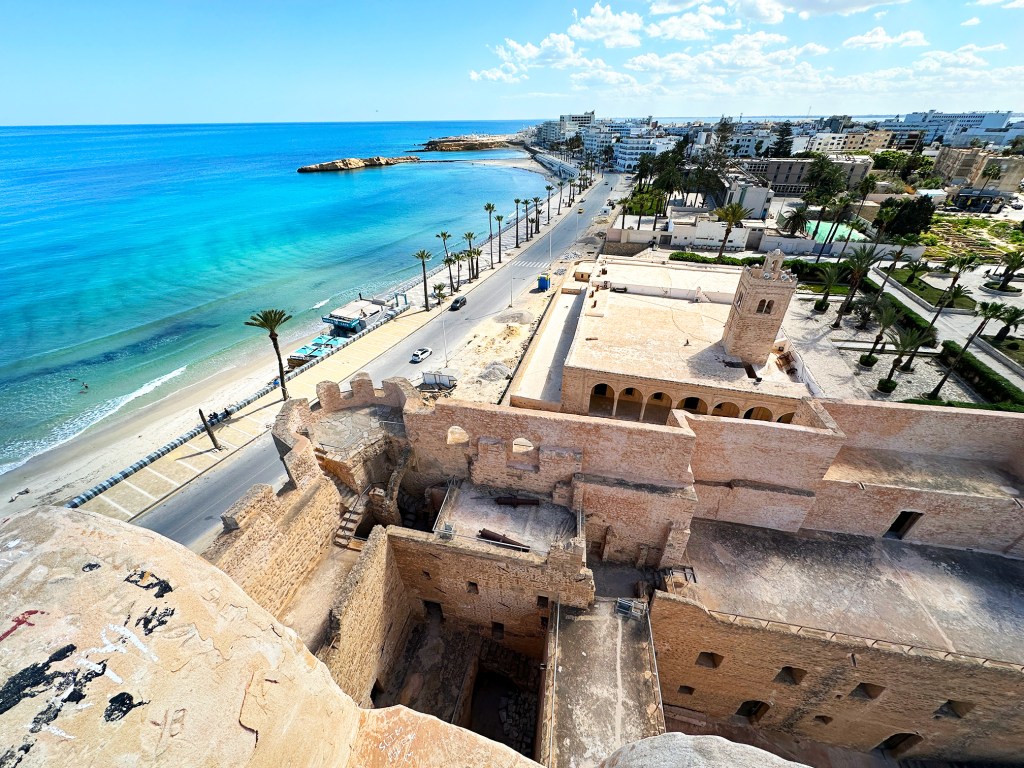
Monastir is just one hour and fifteen minutes east of Kairouan, on the coast. It’s a small beachside town with plenty of things to do to fill a full day. You can visit the Ribat, the marina, walk the promenade, and have lunch with a beautiful view. You’ll need to change louages in Sousse to go between Kairouan and Monastir.

Read More: Visit Monastir Tunisia: Easy Sousse Day Trip
Excursions in Kairouan
Many of the excursions in Kairouan are combined with El Jem making a very cultural full-day trip. Tour groups are very common to the city of Kairouan. I saw many groups on the day I went.
Kairouan Holy City and El Jem Colosseum Tour
This is an 8-hour trip from Tunis, Sousse or Hammamet. You’ll have the chance to visit the Roman Amphitheatre El Jem, as well as a cultural tour of Kairouan including the medina, mosque, souk, etc. The tour includes transportation, a guide, entrance fees, and a lunch.
Getting to Kairouan
The best option for reaching Kairouan is via louage, though there are 2 airports within an hour as well.
Read more: Complete Guide to Renting a Car in Tunisia 2024
Get to Kairouan by Plane
Tunisia is a small country and it is easy to travel by train or louage. But if you prefer to fly, the two closest airports are the Monastir Habib Bourguiba International Airport and the Enfidha-Hammamet International Airport. It is a one-hour taxi ride from each airport to the center of Kairouan.
Check Skyscanner to view flights to the Monastir and Enfidha airports.
Get to Kairouan by louage
The best and easiest way to reach Kairouan is by louage. A louage is a shared taxi van. It leaves as soon as it’s full so there is no exact schedule. You rarely have to wait more than 5 minutes until the van leaves.
Tunis to Kairouan by louage
Tunis Louage Station: Station Louage Moncef Bey
Kairouan Louage Station: Station louage Kairouan.
The drive between Tunis and Kairouan takes just over 2 hours and costs 14.800 TND (5 USD).
Sousse to Kairouan by louage
It is easy to travel between Kairouan and Sousse by louage (shared taxi van). The cost is 6.200 TND (2 USD). You need to purchase your ticket from the ticket booth at the station. After that, someone will ask where you’re going and point you to the correct van to get in. The van will leave as soon as it’s full.


Here are the locations for the Louage stations in:
Sousse (photo top right): Al Lawajat Station
Kairouan (photo top left): Station louage Kairouan
The signs in the Kairouan Loauge station showing destinations are all in Arabic. I had a friend help me translate. You can take a louage from Kairouan to Sousse, Sidi Bouzid, Kasserine, Sebeitla, Gabes, Ben Garden, Medenin, Gafsa, Tunis, Al-Waslatiyah, Hajeb el Ayoun, Selyena, Nabeul, Grombalia, and Bereket el Sahel.
Read More: How to Take a Louage in Tunisia
Is Kairouan Worth Visiting?
Because of its cultural and historical importance, I would say that Kairouan is worth a visit. I personally don’t think it’s one of the best cities to visit in Tunisia, but I see why it is so popular. The inner medina was really cool to see. I loved how peaceful and quiet it was. The people were friendly there. If you have the time, it is worth a visit. If you’re Muslim, then it is definitely worth a visit because it holds so much religious importance.
Where to Stay in Kairouan
Maison d’hôte Chama
This guesthouse is near the medina near the Mausoleum of Sidi Amor Abada. A great breakfast is included. The hosts are welcoming and kind.
Check rates HERE for this Kairouan Guest House. Rooms go FAST.
Dar Alouini
This is a beautiful old traditional Tunisian home in the medina. There is a central courtyard inside, as well as a beautiful terrace. There are Clean rooms, comfortable beds, great staff, and a delicious breakfast.
Book this traditional Tunisian home in Kairouan HERE
Hotel Continental
This hotel is located inside the medina, near the Basins of Aghlabides. The hotel is very modern and has a swimming pool on the premises. Breakfast is included.
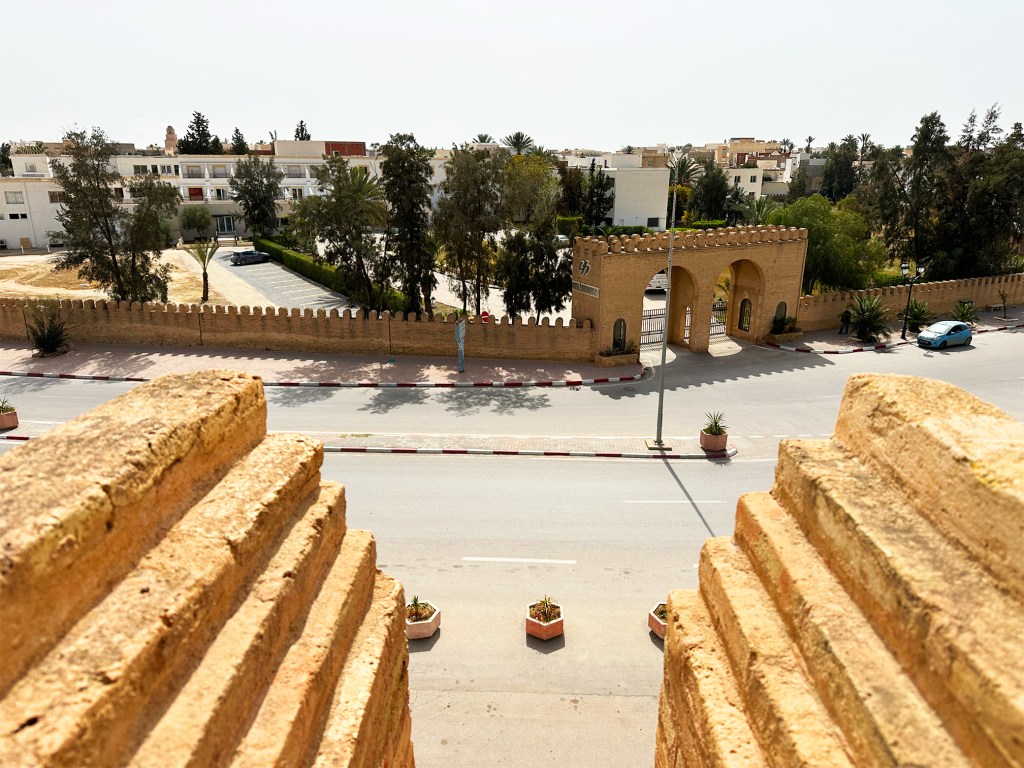
Check availability HERE for this modern hotel inside the Kairaoun Medina
Is Kairouan Tunisia Safe?
Kairouan is safe. I never felt uncomfortable in Kairouan. Yes, lots of men stared at me. But that is par for the course in Tunisia. Nobody ever said or did anything that made me feel unsafe. I feel that people in Tunisia want you to love and enjoy their country, and more than anything, they try to look after foreign visitors.
Things to do in Kairouan Final Thoughts
I found a visit to Kairouan to be a perfect day trip from Sousse. I spent 5 hours in Kairouan, and was able to do and see everything I wanted. There were mosques, medinas, carpets, and cobblestones galore. There are definitely a few things you can cross off your list if you have less time, such as the Aghlabid basins and the Bir Barrouta. But other than that, everything else was really interesting to see. If it hadn’t been Ramadan, I would have loved to try a kafteji sandwich. Instead, I settled for some Makroudh to take away with me.
Pin for your next trip to Tunisia!


TRAVELING SOON?
INSURANCE: Cover yourself with travel medical insurance by SafetyWing.
FLIGHTS: Get the best flight deals with Skyscanner and set flight alerts with Hopper.
STAYS: Check out hotels and apartments with Booking.com and Vrbo.
RENTAL CARS: Get the best deal on rental cars with Discover Cars or RentalCars.
GOING HIKING? Get a 30% discount off your yearly AllTrails+ Account (code: nickiposts30)
eSIM: Get an international eSim with Airalo.
CITY GUIDES: Save time and purchase pre-made city guides with Thatch.
CITY TOURS: Book your tour with GetYourGuide and Viator
LUGGAGE: Get the best carry-on suitcase here.
CREDIT CARD: Start earning travel points with the best travel credit card.
BUENOS AIRES GUIDE: Purchase my Buenos Aires travel companion here.
CONSULTATION: Book a 1:1 travel consultation with Nicki here.
SUBSCRIBE: Get the Nicki Posts Travel Stuff newsletter every month.
TRAVEL BETTER: Check out my Travel Tips and best Travel Resources pages.
MORE? Check out more on my LINKS page to find me in more places!




You must be logged in to post a comment.