Argentina’s Military Past | Madres de la Plaza de Mayo

Some Background of Las Madres de la Plaza de Mayo
Argentina has a deeply complicated history. Like many South America countries in the 1970s, Argentina too experienced the sorrow and pain of a military dictatorship. This awful, yet mysterious period in Argentina’s past, has been the center of several movies and the catalyst for a group called Las Madres de la Plaza de Mayo (Mothers of the Plaza de Mayo).
Argentina has a long history of military dictatorships, dating back to 1930 and consisting of 14 different dictators. In 1976, after a golpe del estado (coup d’etat), Isabel Perón was overthrown and Jorge Rafael Videla was installed as the new “president.” While Videla served as dictator for only 4 years, this military dictatorship lasted for seven years, ending in 1983. This military junta named itself the “National Reorganization Process,” and began what is sometimes known as La Guerra Sucia (Dirty War).
Shamefully, the United States and several European countries supported the Argentine dictatorship during this period as they had a shared goal: they were both “anti-communist.“
Going to Argentina soon? Get Ready at a glance:
Get travel medical insurance with SafetyWing.
Book your stay with Booking.com.
Check Flights with Skyscanner or Hopper.
Rent a car with RentalCars.com or Discover Cars.
Download the Airalo app and get an Argentine eSIM.
Purchase the Ultimate Buenos Aires guidebook.
See all my Argentina guides on the Thatch app.
Take a tour with GetYourGuide or Viator.
Have a 1:1 consultation with me in advance!
The Desaparecidos (The Disappeared)
During The Dirty War, representatives of the military dictatorship would commit human rights violations while also removing students, professors, activists, and other members of the opposition from the streets. They are known as the Desaparecidos (Disappeared). Tens of thousands of people disappeared and were never to be seen again.
Family members of the disappeared grew desperate, wondering what happened to their brothers, sisters, fathers, etc. The mothers of the Disappeared began demanding answers. On April 30, 1977, they began congregating in the Plaza de Mayo in front of La Casa Rosada (Pink House- presidential office building). At first they would sit in the plaza as protest, however, the police declared a state of emergency in attempts to get rid of them. Therefore, their sit-in turned into a walk.


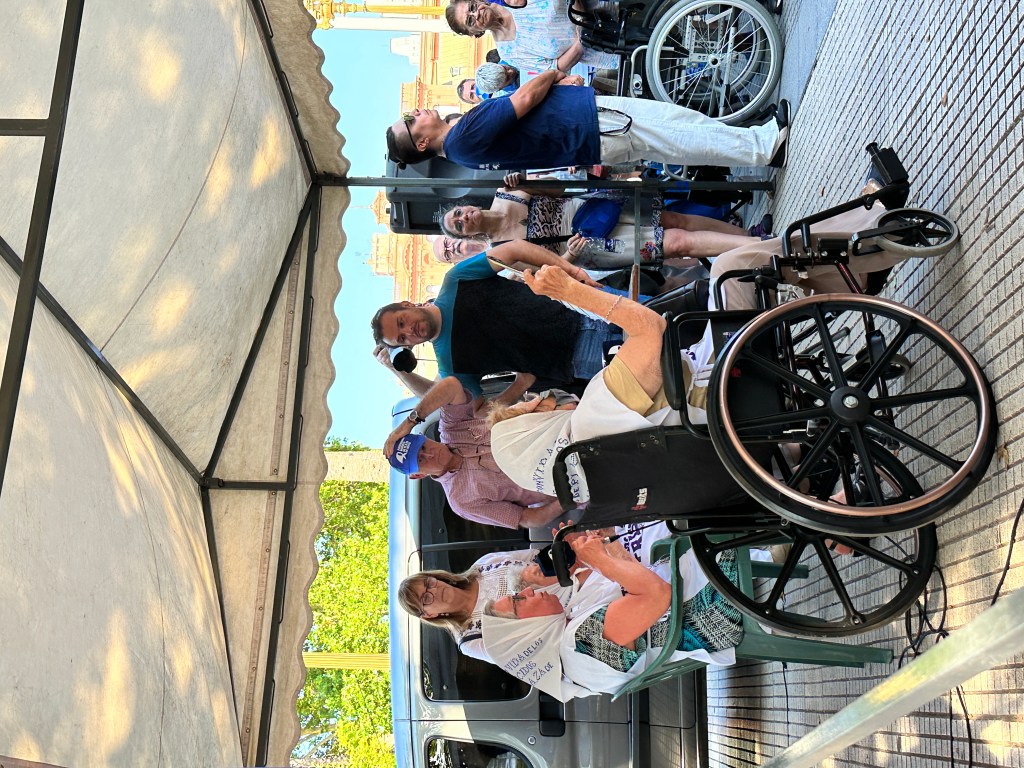
To represent the missing and disappeared, the mothers embroidered the names of their children into cloth diapers, and wore them on their heads as they marched around the Plaza de Mayo. This image of the diaper is now the iconic image of the movement, Las Madres de la Plaza de Mayo.
Some of the Disappeared were pregnant when they were kidnapped. When their babies were born, they were taken away and given to wealthy families close to the dictatorship who raised them. There is a national DNA database for families of the Disappeared. If someone feels they may be one of these missing children, they can take a test to determine if this is true. Two missing nietos (grandchildren) were discovered in December 2022, bringing the number of recovered children up to 132.
The 1980’s: March of Resistance
In 1980, the Mothers held a “March of Resistance” and walked around Plaza de Mayo for 24 hours. Even after the military dictatorship ended in 1983, the Mothers marched for several years. Since then, the group has morphed into a human rights group, calling attention to human rights violations worldwide. They are presently associated with the left-leaning political party Kirchnerismo, named after the previous presidents Nestor and Cristina Kirchner.
Modern Day Las Madres de la Plaza de Mayo
To this day, the Mothers of the Plaza de Mayo continue to march in front of La Casa Rosada. They meet on Thursdays at 3:30pm and walk around the monument in the center of the plaza. There are still a few of the original mothers remaining. One of the group’s leaders, Hebe de Bonafini passed away in November 2022.

After the march, there are speeches in the plaza. Then, around 5:30, the Mothers, and anyone else who cares to join, return to the Madres de la Plaza de Mayo Center, which is located at the Plaza del Congreso. There, they watch a film together and discuss the theme.
You can also visit this center from Monday- Friday, 9am – 5pm. It is free to enter. There is a small merchandise shop, as well as a hallway and a room full of paintings, and photographs of the Mothers throughout the years.
Unfortunately, there is not a lot of written information on the walls, but it is an interesting photographic look at a period of Argentina’s dark history.
If you’re planning to visit Argentina, I highly recommend stopping in the center, even if just for a few minutes. This will help you gain a better understanding of the long and complicated past of this incredible country.
Guided visits are also available upon request (in advance). The notice posted in the center reads:
TRAVELING SOON?
INSURANCE: Cover yourself with travel medical insurance by SafetyWing.
FLIGHTS: Get the best flight deals with Skyscanner and set flight alerts with Hopper.
STAYS: Check out hotels and apartments with Booking.com and Vrbo.
RENTAL CARS: Get the best deal on rental cars with Discover Cars or RentalCars.
GOING HIKING? Get a 30% discount off your yearly AllTrails+ Account (code: nickiposts30)
eSIM: Get an international eSim with Airalo.
CITY GUIDES: Save time and purchase pre-made city guides with Thatch.
CITY TOURS: Book your tour with GetYourGuide and Viator
LUGGAGE: Get the best carry-on suitcase here.
CREDIT CARD: Start earning travel points with the best travel credit card.
BUENOS AIRES GUIDE: Purchase my Buenos Aires travel companion here.
CONSULTATION: Book a 1:1 travel consultation with Nicki here.
SUBSCRIBE: Get the Nicki Posts Travel Stuff newsletter every month.
TRAVEL BETTER: Check out my Travel Tips and best Travel Resources pages.
MORE? Check out more on my LINKS page to find me in more places!




You must be logged in to post a comment.