Is Patagonia Safe? A Traveler’s Guide For 2025 By An Expert!
Keep yourself safe with these tips from someone who has been to Patagonia several times.

Argentina Patagonia is comprised of 6 large provinces: Rio Negro, Neuquen, La Pampa, Chubut, Santa Cruz, and Tierra del Fuego. I have been to all of them except for La Pampa, which mainly consists of long stretches of road through grassland. This region is known for its sweeping landscapes and challenging mountain hikes.
I have driven along the famous Ruta de los 7 Lagos, hiked extensively in Bariloche and El Chalten, visited the wildlife and nature around Puerto Madryn, awed at the Perito Moreno Glacier, and taken a cruise on the Beagle Channel at the End of the World in Ushuaia. I have returned to Patagonia several times and it’s safe to say I know it well.
In this blog post, I’ll discuss that little question I get asked all the time: Is Patagonia safe?
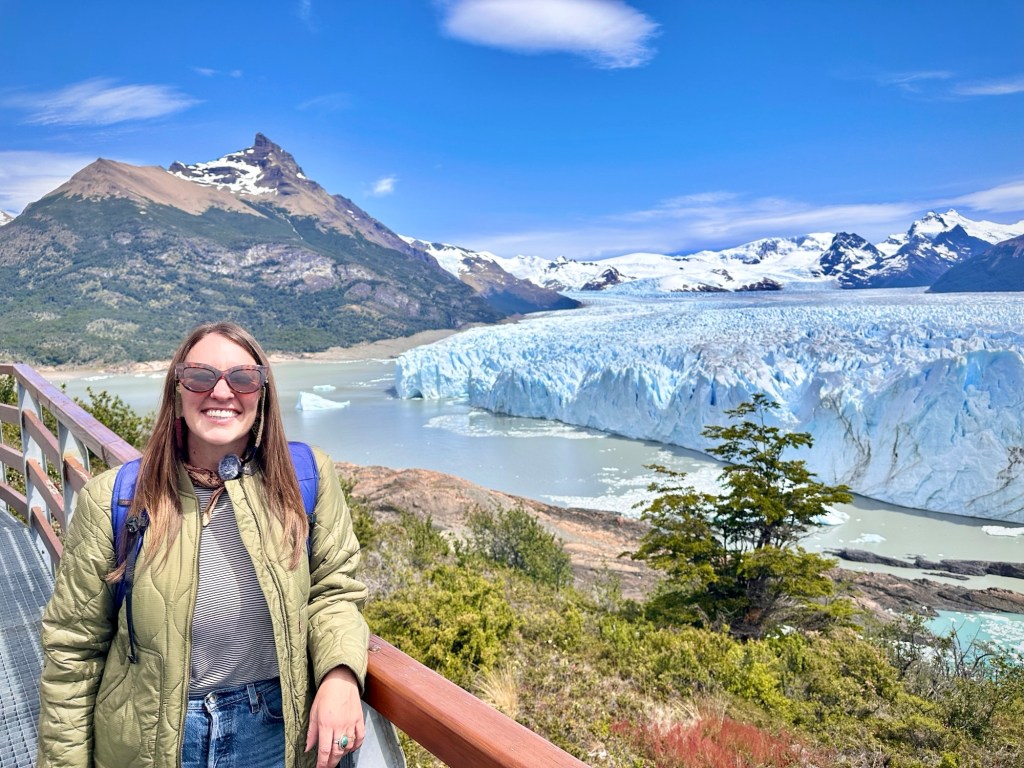
Is Patagonia Safe?
It’s natural to wonder about the safety of a place you have never been before. Fortunately, Patagonia is a very safe place to travel, but there are always things you should be aware of to ensure you have the best trip.
There are low crime rates and virtually no dangerous animals when visiting Patagonia, so read on to discover how you can have a great time down in the most southern region of South America.
Is Patagonia safe for solo females?
Absolutely yes! I have traveled alone in Patagonia multiple times and never felt scared or threatened. In fact, I think Patagonia is one of the safest places you can travel in South America as a solo female traveler.
Even though I was traveling ‘alone,’ I was very rarely alone. It was easy to meet other travelers from the US, Europe, and other South American countries, and we made quick friends. I met a group of people while hiking Refugio Frey in Bariloche and then we all traveled together for the next few days.

I made friends in El Calafate and we met up again at the Perito Moreno Glacier and again in El Chalten to go hiking. I met up with El Chalten friends during my 3 days in Ushuaia. All of this to say, Patagonia is the opposite of ‘unsafe.’ I was always in the company of other travelers and making new friends. Lots of people visit the same places in Argentine Patagonia so it’s easy to see the same people again and again.
Is it safe to hike Patagonia alone?
Yes! I’ve hiked over 10 trails around Bariloche. I’ve hiked another 6 trails around El Chalten. I never felt unsafe. For the most part, trails are very well marked. Sometimes the trail is not super obvious, and for that, I always use AllTrails+ to keep me on track.
I’ve never encountered any dangerous animals on a trail. The puma is the only real threat in Patagonia and it is extremely rare to run into one. The more popular trails are full of other people, which makes the atmosphere feel public and merry. I have met a ton of really great people on Patagonia trails who are my friends to this day.

There are also certain places, like the Perito Moreno Glacier in El Calafate, where it would be impossible to get lost. The trails are clear and distinct, just like in Iguazu Falls. The Parque Nacional Glaciares is full of people around everywhere and the trails have safety rails set up.
I have spent time in Patagonia in November, December, and January. Those are considered to be the warmer, summer months. This is when the trail conditions are best as there is limited snow, if any at all. There are some rainy days during the summer when it is not advisable to hike as the trails become slick.
Going to Argentina soon? Get Ready at a glance:
Get travel medical insurance with SafetyWing.
Book your stay with Booking.com.
Check Flights with Skyscanner or Hopper.
Rent a car with RentalCars.com or Discover Cars.
Download the Airalo app and get an Argentine eSIM.
Purchase the Ultimate Buenos Aires guidebook.
See all my Argentina guides on the Thatch app.
Take a tour with GetYourGuide or Viator.
Have a 1:1 consultation with me in advance!
Safety Tips For Travelers
Patagonia is the safest region in all of Argentina. I found the north of Argentina to feel extremely safe, but Patagonia feels even more so. The crime rate is low and the only dangerous animal that lives down there is the puma, which you’re unlikely to run into. The remaining wildlife in Patagonia, such as penguins, guanacos, grey foxes, etc. do not pose a threat.
The Patagonia region of Argentina is also one of the most well-traveled areas in the country for non-Argentines. I met more foreigners in Bariloche, El Chalten, and El Calafate than I did in any other region in Argentina. I met so many other travelers in these areas, which made traveling there feel extra safe.
The other travelers are all in the same situation as you. They want to see nature, hike, and make friends. Because of this, Patagonia is also the most fun region to travel within Argentina.


#1: Download a Hiking App
Downloading a hiking app is essential for hiking and traveling in Patagonia. While the hiking trails are usually well-marked in the National Parks, every once in a while you’ll find a fork in the road without a sign. I heavily rely on AllTrails+ for this because I feel confident knowing I’m always going the right way.
I use AllTrails Plus when I go hiking. I highly recommend it as you can download offline maps, and send out “lifelines” to friends and family to let them know exactly where you are. You can rate trails, and get inspired to try new ones. The membership is $35/year, but with this discount, it is just $25 for the year. That’s barely $2/month.
Click here to get 30% OFF of your own AllTrails Plus account
Use code: nickiposts30
#2: Don’t leave anything in your rental car
While crime rates are low in Patagonia, the only bad thing I’ve heard of happening is the car rental scheme. I want to be clear that this is all hearsay, but I’ve heard it from multiple people now.
The stories I’ve been told involve travelers renting cars from Hertz in Bariloche. Within a day or two of renting their car, they return to find that they have been robbed, with everything stolen from the inside. My friend told me that he believes someone working with Hertz in Bariloche is running a scam.
The theory goes that Hertz has tracking devices on all their cars so the worker knows exactly where each car is. They then inform their partners when the car has been parked for a while, and thieves go and rob them.
To avoid anything similar, I suggest never leaving anything of value inside your rental car, even if you are just going to the supermarket or for a hike. My friend’s rental car was robbed while he was having a beer at the Patagonia Brewery along the Circuito Chico, outside of Bariloche.
#3: Keep your gas tank full
If you’re planning to rent a car in Patagonia and drive around, you should keep an eye on the gas tank. There are long stretches of highway with nothing in between, especially in La Pampa and other less populated regions. It would be terrible to run out of gas or get a flat tire in the middle of nowhere with nobody passing by.
Ensure that your rental car has all the necessary tools and equipment to change a tire, set up the orange triangle with flares, etc. It may feel like overkill, but you should fill up your gas tank around the halfway point rather than waiting until you’re near empty. This overpreparation will save you a headache later.
#4: Keep your eye on the weather reports
The weather in Patagonia can change quickly, from day to day, even from hour to hour. You should check the weather before you go on a long hike to ensure you have the correct clothing items and protective gear. This is especially true if you are traveling to Patagonia in the colder months.


It would be a bummer to get to the top of the Laguna de los Tres hike in El Chalten only to have it start pouring rain, and you’re in a tank top. Being aware of the weather can save you a lot of headaches later on. It is cold in the early morning starting a hike, but hot by late morning. You need to plan for all of this.
I usually use the weather app attached to my phone, but I also often check with locals if there is any concern. The locals have a better idea of weather patterns in the area and have developed an instinctual sense of how things are going to go.
#5: Come prepared with the correct clothing
This goes hand in hand with paying attention to the weather. Make sure you have a great rain jacket, down jacket, or fleece jacket, depending on the weather conditions. You should also keep a bottle of SPF and sunglasses in your backpack.
For icy or snowy hikes in the winter, I use rubber spikes that slide right over my boots. Patagonia is famous for its mountains and hikes, so you need to make sure to have a sturdy pair of hiking boots. I have had my Danner hiking boots for years now and they’re still in great shape and sturdy.
If you’re a new beginner hiker, check out my favorite hiking gear. It’s important to wear the right clothing to stay safe in Patagonia.
#6: Stay Hydrated
As someone who grew up at the foothills of the Rocky Mountains, I understand the importance of staying hydrated in these types of climates. You should always bring water with you on every hike. I calculate about a half liter for every 1-2 hours.


I personally prefer to hike with a water bladder, making it easier to hike hands-free. That way you can carry the water on your back and you don’t have to carry an annoying water bottle around. I use a water bladder that I stuff into a backpack for longer hikes and the waist hydration pack for medium-length hikes.
For the most part, water is safe to drink in Patagonia. I was even told that I could drink the river water along the Laguna de los Tres hike in El Chalten. Many of the places I stayed at even had signs noting that the tap water was safe. This makes it very easy to fill up your water bladders.
Getting Around Patagonia Safely
Getting around Patagonia may be expensive, but it is not dangerous. There are several options, but the most common way to travel between cities is by bus. Many cities within Patagonia are far apart, so you should be prepared for long bus rides. Is transportation safe in Patagonia? Yes!
Taking Taxis
Many cities in Patagonia do not use Uber (but Ushuaia does use it!) so you may find yourself taking regular taxis. Many times, these local taxi drivers offer long-distance service. For example, in El Calafate, the taxi drivers offer service from town to the Perito Moreno Glacier or to El Chalten.
Because the service is more specialized, it will be more expensive. This is a good option if your budget is large, or you have a group of people you can split costs with.
Taking Buses
The most common form of transportation between cities in Patagonia is by bus. However, you should be prepared for long rides because many cities are far apart. For example, the bus between Rio Gallegos and Ushuaia takes over 12 hours and goes once per day. The bus from Bariloche to El Calafate takes around 24 hours.
Some cities are much closer and it is common to meet other travelers along this route, like the El Calafate to El Chalten bus, which takes 4 hours and has several buses per day. Many of the longer bus routes have just one bus per day so plan accordingly and well in advance.
You can check Patagonia bus schedules here. The most common bus companies in Patagonia are Marga Taqsa, CalTur, Chaltén Travel, ViaTac, and Via Bariloche.
Flying
It is possible to fly between the most popular destinations in Patagonia. You can find airports in Bariloche, El Calafate, Ushuaia, Puerto Madryn, etc. The most affordable flights to Patagonia leave from Buenos Aires.
There is no airport in El Chalten. You need to fly into El Calafate in order to reach El Chalten. It is possible to fly between Ushuaia and El Calafate but you should plan far in advance. Flights between Patagonia destinations tend to be very expensive and don’t go very often.
The main three airlines in Argentina (Aerolineas Argentinas, Flybondi, JetSmart) are not very reliable and often cancel flights. Book flights with caution and know they may get canceled or rescheduled at the last minute.
Driving
Many people choose to rent a car in Patagonia, for good reason. This gives you a ton of freedom to move around as you please. Public transportation is expensive, so you might as well splurge just a bit more to give yourself that extra liberty to do as you please.
If you decide to drive, just remember that you are required to keep your low beams on during the day. It is illegal in Argentina to drive with no lights on during the day. You should also make sure to keep a full tank of gas, and never leave your important belongings in the car.
Take Tours
Sometimes taking tours makes things a lot easier. For example, I purchased a tour to the Perito Moreno Glacier from El Calafate because it included transportation and a guide for a slightly higher price than the local bus. I also did the Catamaran tour in the Beagle Channel to see the area from the water.
I rented a car while in Ushuaia to see the Tierra del Fuego National Park and the surrounding area. But if you don’t want to rent a car, you can also do a tour of the park that provides transportation.
Safety in Patagonia FAQs
In case you’re looking for more info about Patagonia, dive into the questions below.
Do people speak English in Patagonia?
The official language in Chilean Patagonia and Argentine Patagonia is Spanish (or Castellano), along with a few indigenous languages. That said, many of the travelers in the area are from Europe and North America and speak English. Because of this, most of the locals and workers in the area do learn English.
While many locals do speak English, many others don’t. I suggest leading with Spanish if you know even a few words or greetings. They will appreciate this. From my observation, servers in restaurants usually speak English well, but hostel workers do not. But regardless, there will always be a bilingual person within earshot who can help you out.
What is the top predator in Patagonia?
The top predator in Patagonia is the puma. However, it is extremely unlikely that you’ll see one. Do not let this scare you into missing out on Patagonia. As many times as I’ve been hiking in the Patagonia mountains, I have never once seen a puma.
Is altitude sickness a problem in Patagonia?
Not really. While the mountains along the Andes may be large, they are not actually that tall. For example, the tallest peak in Patagonia is the Cerro San Valentin (in Chile) with an altitude of 4,058 meters (13,314 feet). Colorado USA has dozens more 14’ers (peaks over 14,000 feet) than that.


Being from Colorado and possibly more used to higher elevations, I never experienced altitude sickness in Patagonia. I did feel it a bit more up north in Salta and Jujuy, especially when I climbed Volcano Misti in Arequipa, Peru, but never in Patagonia.
What is Patagonia famous for?
Patagonia is a region that stretches across the Andes Mountains between Chile and Argentina. There are so many things to do in Patagonia, but it is most famous for hiking and outdoor adventures.
The hiking mecca in Argentine Patagonia is El Chalten, followed by Bariloche. The most famous glacier in Patagonia is the Perito Moreno Glacier just outside of El Calafate (in the Parque Nacional Glaciares).


Ushuaia is also famous in Patagonia for being the most southern city in the world. It is the first step when making your way to Antarctica across the Drake Passage. The most famous area in Patagonia for viewing wildlife is Puerto Madryn, where you can see orcas, Southern Right Wales, penguins, and more.
Is Patagonia expensive to visit?
Unfortunately, yes. Patagonia is not only one of the most expensive places to visit in Argentina but one of the more expensive places to visit in all of the Americas. This is not the ideal travel destination for budget travelers. Accommodation is especially expensive. Even hostels are overpriced.
If you’re planning a trip to Patagonia, I suggest booking everything as far in advance as possible to avoid higher prices. Flights to get to Patagonia from Buenos Aires and Cordoba are extremely high and will only get higher the closer to the flight dates. The same goes for booking hotels and eating out. Even supermarkets are expensive.
Final Thoughts on Safety in Patagonia
If you’re planning a visit to Patagonia, the last thing you need to be worried about is safety. I have traveled to dozens of countries and hundreds of cities and the Patagonia region in Argentina is one of the safest I’ve ever been to. Patagonia is very safe!
There are so few dangerous animals, making the most important thing to remember for keeping safe is to check the weather and wear the right clothing. Be aware of your surroundings like always, and never leave anything inside a rental car. Put on SPF and download AllTrails+ to make sure you stay on the correct path.
I hope you have a fantastic trip down south!
TRAVELING SOON?
INSURANCE: Cover yourself with travel medical insurance by SafetyWing.
FLIGHTS: Get the best flight deals with Skyscanner and set flight alerts with Hopper.
STAYS: Check out hotels and apartments with Booking.com and Vrbo.
RENTAL CARS: Get the best deal on rental cars with Discover Cars or RentalCars.
GOING HIKING? Get a 30% discount off your yearly AllTrails+ Account (code: nickiposts30)
eSIM: Get an international eSim with Airalo.
CITY GUIDES: Save time and purchase pre-made city guides with Thatch.
CITY TOURS: Book your tour with GetYourGuide and Viator
LUGGAGE: Get the best carry-on suitcase here.
CREDIT CARD: Start earning travel points with the best travel credit card.
BUENOS AIRES GUIDE: Purchase my Buenos Aires travel companion here.
CONSULTATION: Book a 1:1 travel consultation with Nicki here.
SUBSCRIBE: Get the Nicki Posts Travel Stuff newsletter every month.
TRAVEL BETTER: Check out my Travel Tips and best Travel Resources pages.
MORE? Check out more on my LINKS page to find me in more places!




You must be logged in to post a comment.