5 Best Cities in Argentina: From North to South
Discover the 5 best cities in Argentina to live and travel, from the north to the south. Argentina has everything to offer an adventurer, from desert landscapes to mountain paradises.

Before traveling or moving to a new country, it can sometimes feel a bit overwhelming. Where to start? Where to live? Which city will I connect with? Where will I like the best? Where is the easiest place to make friends? Will I feel comfortable? What are the best cities in Argentina?
Before going to Argentina, I had all these questions too, but nowhere to find the answers. The only way was to go there. The best way to know a place will always be to go there and really “feel” what it is like for you. But if you want to have an idea before you get there, this is the right place for you to start.
I spent over 1.5 years living in and traveling through Argentina, and I want to share everything I have learned with you.
5 Best Cities in Argentina
I am going to compare and contrast Argentina’s top 5 cities:
For each location, I will discuss (to the best of my ability): the overall vibe, basic Info, housing, prices, food, social life, and nightlife. If you have a question about any other topic related to these cities, you can book a private consultation with me.
Going to Argentina soon? Get Ready at a glance:
Get travel medical insurance with SafetyWing.
Book your stay with Booking.com.
Check Flights with Skyscanner or Hopper.
Rent a car with RentalCars.com or Discover Cars.
Download the Airalo app and get an Argentine eSIM.
Purchase the Ultimate Buenos Aires guidebook.
See all my Argentina guides on the Thatch app.
Take a tour with GetYourGuide or Viator.
Have a 1:1 consultation with me in advance!
City 1: Buenos Aires
Overall Vibe of Buenos Aires
Buenos Aires has everything. It’s a massive city full of chaos, noise, and car honks. It’s also full of theatre, culture, museums, live music, parks and markets. You could spend years in Buenos Aires, and still not see everything. Buenos Aires is an exciting city.
There is always something going on every night of the week. The architecture in the older areas of the city is impressive. There are also great rooftop bars where you can catch views of the city from above.
People are generally friendly in Argentina’s capital. However, Porteños (people living in BA) have the reputation of being arrogant and seeing Buenos Aires as the center of everything.
If you like the city vibe of Buenos Aires, but want something perhaps a little more chilled out, check out Mar del Plata, just a few hours down the coast.
Get my Buenos Aires 10-Itinerary Travel Guide on Thatch here.


Basic Info about Buenos Aires
Buenos Aires is the capital city of both the country and the province of Buenos Aires. It’s often referred to as CABA (Ciudad Autonómo de Buenos Aires), Capital Federal, Baires, or Ciudad de Furia (City of Fury). Buenos Aires is easily one of the best cities in Argentina, if not the absolute number one.
Buenos Aires sits on the western edge of the Rio de la Plata (River Plate), in the northwestern area of the country. The population of Buenos Aires proper is nearly 3 million, however, it reaches around 15 million when including the surrounding suburbs and metropolitan area.
Buenos Aires also has the 6th largest Jewish population in the world. Most international flights will arrive in Buenos Aires (EZE). This city is also the hub for the majority of domestic flights as well. Buenos Aires gets very hot and humid in the summer. In the winter it gets cold, but it is unlikely to snow.
Housing in Buenos Aires
Buenos Aires has 48 total neighborhoods, though you’ll likely spend time in no more than 10-15 of them. The neighborhoods on the edges of the city are mostly suburban and don’t offer much more than housing.
Some of the most popular neighborhoods in the center of the city are Palermo, Belgrano, Recoleta, San Telmo, La Boca, Puerto Madero, Almagro, Caballito, Villa Crespo, Chacarita, and Colegiales.
Housing in Buenos Aires tends to be quite expensive when compared to other cities. These days, the more “affordable” housing options tend to be between $500-$700 USD/month. A short-term rental on Airbnb is generally between $30-$50/night (of course higher is also available).
Read More: How to Find Housing in Buenos Aires

General Prices in Buenos Aires
While housing tends to be on the higher end of things, the other services and goods are generally quite reasonable. Here are a few items and their approximate prices:
- A steak and a glass of wine at a local parrilla restaurant: 7 USD
- Coffee with 2 croissants: 2 USD
- Dinner at a more international restaurant: 7- 10 USD
- A weekly supermarket haul for one person: 15- 20 USD
- The subte: 0.15 USD,
- The bus: 0.10 – 0.20 USD (Read more about public transport in BA here)
- Gel Manicure: 7-10 USD
- Laser hair removal package for many body parts: 12 USD
- A craft beer: 2-4 USD
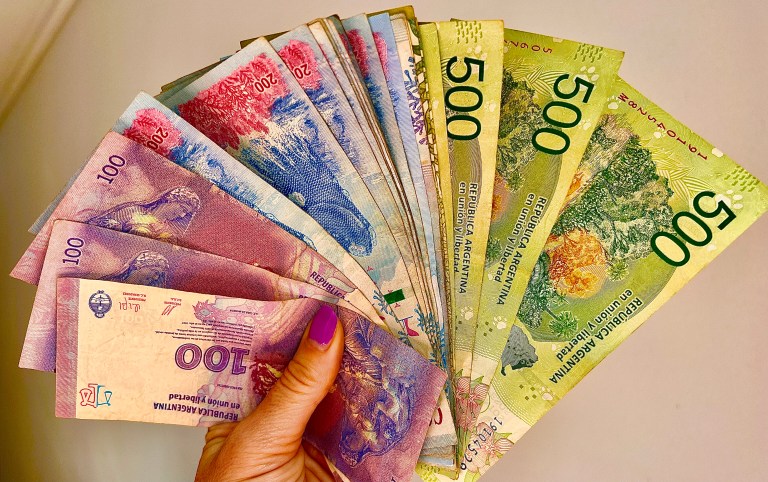
Note: All prices are listed in USD (US Dollar $). I have not listed prices in Argentina pesos because prices change incredibly fast due to inflation.
Food in Buenos Aires
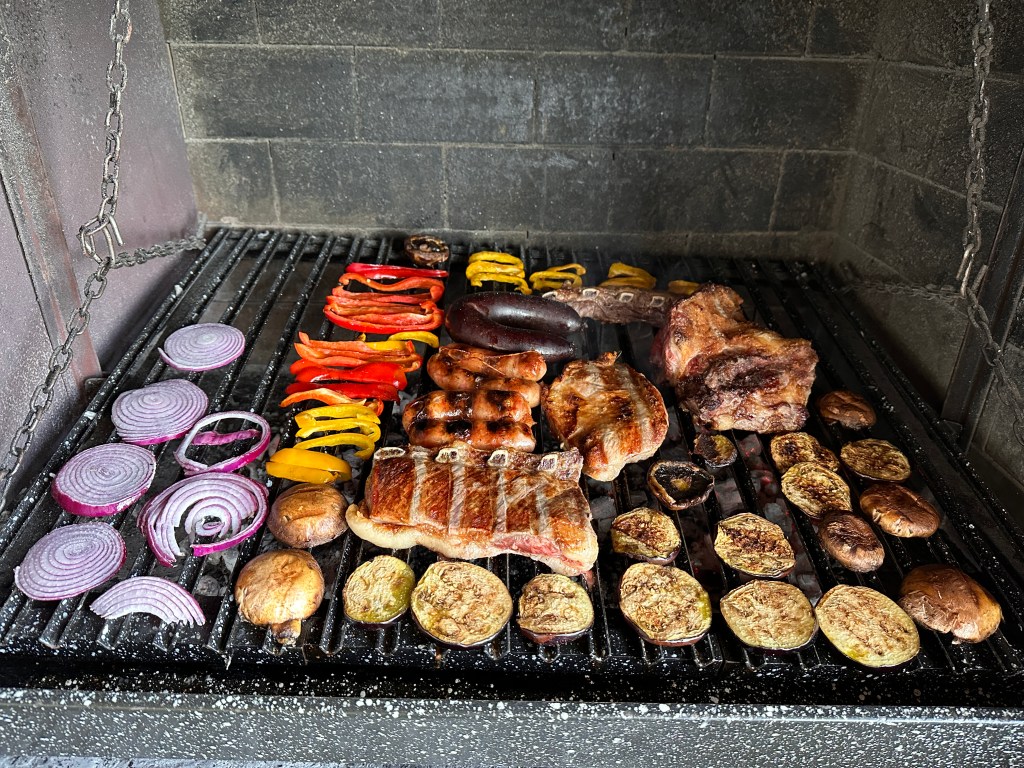
Buenos Aires has the best variety of food in the entire country. You can find Chinese, Japanese, Vietnamese, Thai, Peruvian, Indian, Italian, Venezuelan, etc. However, it is harder to find less common cuisines such as Georgian or Mongolian, for example.
You can easily find typical Argentinian food, such as parrilla, empanadas, alfajores, etc. everywhere.


Even though Argentina loves its meat, there are a ton of new vegan and vegetarian restaurants popping up all over the place. There are also several craft beer bars and breweries. While there is a large variety of food, food tends to be pretty bland here. You won’t find a lot of spice. They also don’t put salt on the table. You need to ask for it.
Social life in Buenos Aires
Buenos Aires is the best and easiest place to make new friends in the country. There is a Facebook group, and a ton of WhatsApp groups for various activities: tag rugby, basketball, running, language meet-ups, social gatherings, foodie meetups, trivia, etc.
You can find the highest concentration of foreigners in Buenos Aires, which increases your chances of making friends. Both foreigners and locals tend to be very social in Buenos Aires.
Nightlife in Buenos Aires
As you might expect, the nightlife in Buenos Aires is very active. I would say the most popular area for going out at night and on weekends is Palermo Soho. Here you can find a ton of restaurants, lounges, bars, and clubs open late, including those that cater to the LGBT community.
San Telmo also tends to come alive on weekend nights, especially Sunday evenings after the Sunday San Telmo Market. You can run into Brazilian drums in the street with a parade following behind, or people spilling out of small bars and onto the cobblestone streets drinking their craft beers.
Vermouth and whiskey bars are also becoming quite trendy and you can find a few around the neighborhood of Chacarita. There is also a great craft beer spot in Chacarita as well.
Where to Stay in Buenos Aires
Casa Caravan
This is a stunning oasis in the center of Palermo, with a swimming pool, outside garden, and bar. An amazing breakfast is included.
Book now to stay in this plant-based hotel in the heart of the city.
City 2: Córdoba
Overall Vibe of Córdoba
Córdoba very much has a city vibe, but it’s not nearly as big as Buenos Aires. It’s a much more chill big city. It has all the conveniences of a big city, but less of the noise and chaos. Because of its proximity to nature, even though it’s a city, life in Cordoba tends to be pretty laid back for the most part.
Argentinians often laugh at the sing-songy accent of Cordobans, who are known for having a goofy and fun sense of humor, as they are always laughing. I found Cordobeses to be very open and welcoming.
Every weekend there is a market along the cañada (canal) that goes through the center of the city. The market fills up and has a warm, fun environment.
Córdoba is one of the biggest student cities, as there is a very popular medical school there. Because of that, the population tends to be quite young in the city center.
Find my Córdoba travel guide on the Thatch app here.


Basic Info about Córdoba
Córdoba Capital is the capital city of the Córdoba province and the second-largest city in Argentina. Its population is 1.5 million, half that of Buenos Aires. It lies nearly 700km northwest of Buenos Aires.
The province of Córdoba is covered in mountains, so Cordobans often head to the outskirts of the city on the weekends, such as Carlos Paz. You can find yourself at a river or a hiking trail, such as Los Gigantes, within 30 minutes.
There are also historical European influences in this province, like the German towns of Villa General Belgrano and La Cumbrecita, or the English town of La Cumbre.
It is fairly easy to walk through and across the city of Córdoba. There is public transit, though the buses come much less frequently than they do in Buenos Aires (there is no subte). Córdoba does not use the same SUBE card as Buenos Aires. It uses a red card called “Red Bus.” Finding a taxi is rarely a problem.
Temperatures in Córdoba tend to be much warmer than in the country’s capital city. Summers are hot and humid, though winters are quite mild. It never feels too cold in Córdoba.
Read More: What to Do and See in Córdoba Capital

Housing in Córdoba
Housing in Córdoba is far more affordable than in Buenos Aires. It’s a big city, but with fewer people, which means less demand and lower prices. My one-bedroom apartment in Córdoba was $250/mo. The price increased each month, but based on the blue dollar, I was still paying about the same amount in USD.
Córdoba Neighborhoods
A few of the more popular neighborhoods for living in Córdoba are:
- Nueva Córdoba
- Guemes, Alberdi
- General Paz
- Cerro de las Rosas.
Nueva Córdoba is where you’ll find the majority of the students living. There are apartments, restaurants, bars, cafes, and a very young feel.
Guemes is a very active part of town. It runs along the canal in the center of the city. Every weekend there is a market near the canal, and Calle Belgrano is full of restaurants, bars, cafes, and nightlife. There are also small alleyways all throughout this neighborhood with more gastronomical gems hidden away.
Alberdi is just a 20-minute walk northwest of Guemes. It’s quiet and more residential, though not far from the city center or nightlife. You can find all the conveniences here- supermarkets, fruit stands, kioscos, etc. This is a more affordable neighborhood yet it is close to the action. This is where I lived for 3 months.

General Paz tends to have a higher average age of its residents and is a bit wealthier. The people living here are young professionals in the midst of their careers with a bit of money to spend. It’s a safe neighborhood and full of restaurants and cafes.
Cerro de las Rosas is northwest of the city center, about a 10-15 minute drive away. However, it is quite popular with young professionals and young families. It does have its own center area and some nightclubs, but it does feel a bit cut off from the rest of the city.
Cerro de las Rosas is similar to General Paz in that you can find 40-something young professionals living here, both with and without families. Even though it is a bit outside the center, housing costs in this area tend to be a bit higher.
General Prices in Córdoba
Prices for food, beer, goods, and services are not that much different than in Buenos Aires. Prices may run slightly less, but not enough to really notice a drastic difference. The bus is more expensive, at around 0.20 USD, but you’ll need it less as Córdoba is easily walkable.
I found laser hair removal to be much more affordable in Córdoba however. I paid roughly half of what I paid in Buenos Aires for the same services at my clinic in Cordoba, which was usually around 7-10 USD for full leg, bikini, and armpits.
Food in Córdoba
Córdoba does not have the international variety of food that can be found in Buenos Aires. Not even close. The majority of food that I found around the city was typical Argentine options (steak, sandwiches, empanadas, locro, etc.). The international food I tried (Mexican, Indian, Chinese, and Japanese) was very mediocre.
There is a pretty decent Thai restaurant (Khao San) in Guemes. There are a ton of great brunch places in Córdoba however.


One of Córdoba’s most famous restaurants is La Cocina de Fazzio, which is a fish restaurant inside the Mercado Norte and is open only 4 hours per day. The food is great and the atmosphere is super fun.
Also, they say that the drink Fernet & Coca-Cola started in Córdoba, so you should definitely give it a try here.
Social life in Córdoba
The majority of my friends in Córdoba were local Argentinians, as I had a good friend from there who introduced me to his circle. I did try to make connections with foreigners living in Córdoba but really didn’t have much luck.
It seems that the majority of expats living in Córdoba are there with their partners or spouses and are wrapped up in their own lives. I made several attempts to meet up with other expats and make new friends, with little luck. There is a Facebook group that is quite active and helpful if you’re looking for information.
Nightlife in Córdoba
There are a few different areas for going out around the city.
Nueva Córdoba is full of young people and students. There are a number of bars, breweries, and nightclubs in this area.
Guemes is another area that is a good going-out spot. You’ll find a lot of people here. In the summer there will be a lot of people out in the streets. Along the main street in this hood (Calle Belgrano) you can find a ton of different restaurants and bars. There are also several bars hidden in side alleys in Guemes.
In Cerro de las Rosas, there are two popular clubs: Catch and Cruz. These are places where you can have dinner, and then at a certain hour, they turn into a nightclub. Catch is more popular with the mid-30-40’s crowd.
Córdoba is famous for a musical style called Cuartetto. There are a lot of bars and clubs around the centro and Alberdi that play cuartetto music. Attending one of these cuarteto nights is definitely a cultural experience.
Where to Stay in Córdoba
Hotel de la Cañada
This hotel is in a perfect location near the canal, where there is a night market every weekend. There is also a garden, an outdoor swimming pool, a restaurant, a fitness center, free Wi-Fi, and a Continental breakfast. Laundry service available.
Book your stay in this downtown hotel next to the canal
City 3: Mendoza
Overall Vibe of Mendoza
Mendoza can best be described as ‘chill.’ It’s a quiet, relaxed, and clean city. You will not hear the car horns and busy traffic in Mendoza like you do in Buenos Aires. Mendoza is even more relaxed than Córdoba.
There are areas of the city for going out at night, and there are also places for relaxing. Mendoza has all the city conveniences you need like supermarkets, Western Unions, banks, etc. But it also has much less chaos than you will experience in the capital city.
I know safety is a personal and subjective feeling, but I felt very safe in Mendoza. I didn’t feel like I needed to keep checking for my phone and wallet like I do in Buenos Aires, and to a certain extent in Córdoba. Mendoza is one of the safest cities in Argentina.
That said, when sitting outside at restaurants along Avenida Aristides, you will definitely be approached by men, women, and children asking for money and food.
Find my Mendoza travel guide on the Thatch app here.

Basic Info about Mendoza
Mendoza sits at the western edge of Argentina, near the border with Chile, at the base of the Andes Mountain Range. The population is 1,226,000 which is a few hundred thousand less than Córdoba, and more than half of Buenos Aires’ population.
The climate of Mendoza can be compared to Colorado in the US- dry heat, not much humidity, and 300 sunny days per year. The city of Mendoza is quite small and walkable, but nothing feels too far.
There are several city buses and a train. You can use the same SUBE card for the buses and trains in Mendoza as you can in Buenos Aires.
There are lots of opportunities for hiking just a short drive outside of the city. In the province of Mendoza, there are several other beautiful towns such as San Rafael. This region is also most well-known for wine.
Outside of Mendoza (Lujan de Cuyo & Maipu), you can find several wineries and vineyards. I did a bicycle wine tour with Wine & Ride as a day trip. You can also do an easy day trip to the Cacheuta Thermal Baths.
Read More: Everything You Need to Know About Mendoza
Housing in Mendoza
If you’re just passing through, an Airbnb or short-term rental could get pricey. However, if you’re looking to stay longer term, you will be able to find some great deals. It’s a great place for digital nomads looking to live in Argentina but in a more affordable city than Buenos Aires.
My local Mendocino friend told me he pays roughly the equivalent of 150 USD for a 3-bedroom apartment. A good place to start to look for housing is Mercado Libre (categorias–> inmuebles).
It may be beneficial to you to rent something short-term at a higher price and then look around once you get there. You can ask people you meet, as well as ask at the inmobiliaria offices.
I don’t suggest living along Avenida Aristides Villanueva, as it is the busiest and loudest (especially at night) area of the city. The area to the south of Avenida Aristides is very chill, relaxed, and suburban. It is very much just a quiet neighborhood.
The area around Plaza Independencia would be considered the center of the city. There are plenty of restaurants and cafes there, as well as a foot-traffic-only street (Calle Sarmiento).


General Prices in Mendoza
Prices in Mendoza are pretty similar to what I saw in Córdoba and Buenos Aires for the majority of goods and services. For example, a manicure cost me 10 USD which is about the same in the other cities. Prices for coffee and food seem to be just slightly lower in Mendoza. To me, it felt like a very affordable city to live in.
Food in Mendoza
All along Avenida Aristides Villanueva, you can find several (and I mean SO MANY) restaurants, bars, and cafes. Unfortunately, there isn’t much variety. Most of these restaurants offer more or less the same thing- steak, lunch specials of chicken and pasta, salads, and standard Argentine fare.
There are a few fast food-type places along this road as well. Juan B Justo is a street known to have affordable food options and is where young people tend to spend time on the weekends. I wasn’t able to find a very large variety of international cuisine around. My favorite place to grab a drink and snack was at La Central Vermutería.


Social life in Mendoza
The social life seems to be quite active, as is the Mendoza Facebook group. There are weekly language meet-ups and friendly meet-up groups. In the two weeks I was in Mendoza, I went just one time to a meet-up group. It was very mixed- both locals and foreigners.
Everyone was really nice and inviting. If I decided to stay longer in Mendoza, I don’t think it would be too hard to find friends.


Nightlife in Mendoza
As previously mentioned, the main street for nightlife in Mendoza is Avenida Aristides Villanueva. During the day it is a busy street full of people eating lunch. At night, the outdoor tables get packed, and it can be hard to walk down the street because it is so crowded with people. Loud music plays all night.
Juan B Justo Street is another very popular area for going out. There are several bars in a close area. Another popular nighttime spot is the Paseo La Alameda. It is a few blocks of outdoor seating underneath large trees. It is quite popular at night.
There is also a nightly musical fountain show in the center of Plaza de Independencia, which draws big crowds.
Where to Stay in Mendoza
Villaggio Hotel Boutique
This Boutique Hotel is right in the center of town, just one block from Plaza Independencia (where you can see the fountain show). There is a small outdoor pool and a free breakfast every morning.
Book your stay NOW in the heart of downtown Mendoza
City 4: Bariloche
Overall Vibe of Bariloche
Bariloche is a resort town and it shows. It is full of chalets, hotels, guesthouses, hostels, etc. The majority of people you see around town are tourists- both foreign and domestic.
Bariloche is a summer hotspot for hiking, and a winter hotspot for skiing. There is a fun and friendly environment in the city as so many people are there for holiday. There are great food options, pretty decent public transportation to nearby areas and nature, and lots of things to do.
Find my Bariloche travel guide on the Thatch app here.

Basic Info about Bariloche
Bariloche is one of the main cities of the Rio Negro Province, in the north of the Patagonia region. It sits right along the Lago Nahuel Huapi which gives pretty incredible views around the city.
It snows in Bariloche in winter (hence ski resorts), and is quite pleasant in summer. You can easily wear shorts between the months of November – March, but it will be chilly in the evenings.
The permanent population of Bariloche is about 100,000. However, I believe the majority of those residents live mostly outside the city center. There is a good bus system in Bariloche that uses the same SUBE card as in Buenos Aires.
Read More: What to Do and See in Bariloche
Housing in Bariloche
As I mentioned, the majority of housing in the city center seems to be taken up by hotels, Airbnbs, etc. It seems that the majority of people who actually live in the area, live just outside the center.
On the road between Bariloche and the Circuito Chico, there seem to be many neighborhoods where the locals are. It would be possible to find long-term housing in Bariloche, but in high seasons it would be quite expensive.
My personal opinion is that while Bariloche is amazingly beautiful, I wouldn’t want to live there because everyone feels so transient. While there are buses, you would benefit from having a car in this area.

General Prices in Bariloche
Bariloche is one of the most expensive cities I visited in all of Argentina. Everything is more expensive here- bus rides, food, groceries, transportation, housing, etc. You just have to reach a point where you stop comparing how much everything costs in other parts of the country and accept that it’s just going to be expensive in Bariloche.
For example, a bus ride from Bariloche to a hiking trailhead could be anywhere from 0.50- 1.50 USD. In Buenos Aires, an hour-long bus ride across the city is about 0.15 USD.


Food in Bariloche
While expensive, the food is delicious. There is an amazing steak house (several actually), a fantastic Chinese restaurant, a multitude of craft beer bars, etc. There isn’t too much international flavor (besides the best Chinese restaurant in all of Argentina), but the food was amazing. This area is famous for raspberries, chocolate, and trout.
Social life in Bariloche
I found that Bariloche was one of the easiest places to meet people and make friends while traveling. This may be due to the fact that there were so many tourists there. I met people hiking, in pubs, in hostels, etc. People in Bariloche are definitely social.
That said, the people you’ll meet are the ones working in hospitality, and other travelers most likely. Living there might be a bit more tricky to find people who really live there, and are not just passing through.


Nightlife in Bariloche
There is definitely an active nightlife in Bariloche. You can’t have that many hostels, backpackers, and craft beer bars to not have an active nightlife. Everything in Bariloche is easily walkable, which makes going out easy.
Where to Stay in Bariloche
Berkana Hostel y Bar De Playa
This hostel is right next to Lago Nahuel Huapi. The views are ridiculously nice. There is a patio and bar that extends over the water so you can enjoy a craft beer and burger as the sun goes down over the lake.
Book your stay along Lago Nahuel Huapi and stay in PEACE
City 5: Salta
Overall Vibe of Salta
I was in Salta in the winter, so things were quite slow. On Sundays, the streets are completely dead. I have heard that Salta in the summer is fantastic.
It’s a pretty chill city, though a lot of it does seem to be falling apart. The buildings feel very old. Nothing modern about this city. Lots of potholes, old buildings, a general feeling of ‘run down.’
The center of the city has a few walking streets and a nice main plaza, both of which remind me of the center of Córdoba somewhat. The people in Salta are very friendly and welcoming. Their accent in Spanish is quite different from the rest of the country.
There is more of an indigenous influence up north, which is reflected in the folkloric music scene, which is very popular here. This is not one of the most famous cities in Argentina, but it is one of the most culturally rich cities. Not far from Salta, you can find the Quebrada de Humahuaca, which is a UNESCO World Heritage Site.
Find my Salta & Jujuy travel guide on the Thatch app here.

Basic Info about Salta
Salta is the capital city of the province of Salta. It is far up north in Argentina. Part of the Salta province actually shares a border with Chile on the west, and Bolivia and Paraguay in the northeast corners.
This city is smaller than all the others I’ve mentioned in this post, with a population of about 720,000. Salta gets cold in the winter, though certainly not as cold as the south of the country. It does not snow in Salta, as it has more of a desert climate. The summers are very hot.
The best months to visit Salta are March/April before it gets too cold, and September/October before it gets too hot. Although, I was there in May and June and still really enjoyed myself. The city itself is very walkable. You can easily walk from one side to the other.
Read More: How to Spend One Day in Salta
Housing in Salta
Housing is both cheaper for short-term rentals, and long-term rentals. I stayed in a small apartment with a kitchen in Salta for one week and paid 10 USD/day. Hostels are even cheaper. If you’re looking for long-term housing, you can find prices for around $150 – $300/month.
Read More: The Ultimate Guide to Argentina’s Northern Provinces
General Prices in Salta
Whereas Bariloche is the most expensive city I visited, Salta is one of the most affordable. The prices for food, accommodation, transportation, and other activities were really reasonable. It is the same thing for the rest of the area- the provinces of Salta and Jujuy are the cheapest to travel.
The most expensive guest house I stayed at in Jujuy was 25 USD/night, which would be considered extremely low-budget in Patagonia. Your money goes much further in the north.
That said, services are pretty comparable to the rest of the country. I got a manicure for 7 USD. A shoe shine in the main plaza was 0.75 USD. Food in Salta is very affordable. Lunch menus were usually less than 5 USD.

Food in Salta
The food in Salta is delicious. They still have asado and all the main Argentine staples, but with a more northern flair. The empanadas in the north tend to be smaller, and more deep-fried. There is more variety of meat as well- lots of llamas and sheep. Lots of stews. Humitas and Tamales are also extremely popular up north.
My favorite thing about the food in Salta is that it tends to be spicier and has much more flavor than in the rest of the country. There is not a whole lot of international variety, unfortunately.


If you start to get sick of the local foods, there are not a whole lot of other options. However, there is a great pokè shop with nice smoothies called Lilo, just outside of the main center.
One of the biggest and best surprises was that I found two small Korean shops with Korean goods.
Social life in Salta
I didn’t have much luck meeting other expats in Salta. I tried to join the Facebook group, but I was never accepted into it, which leads me to believe it is mostly a ghost town in there. However, I did manage to meet several local Salteños who I became good friends with. The people in the north are very friendly.


Nightlife in Salta
Folkloric music is popular up north, and you can find it in a place called a peña. There are peñas all over the city. One of the most well-known is called La Casa del Molino. A peña is a place where you usually eat dinner or have drinks, and there is live folkloric music played.
Sometimes the music is casual, and people randomly start playing. Other times it is more organized. Regardless, it is a good time. Lots of people- young and old, tourists and locals, go to peñas at night. It’s a great place to socialize and meet people.
La Casa del Molino is a bit outside of the main center, though you can also find several in the center. There are also several small craft beer bars around.
Where to Stay in Salta
Gran Hotel Presidente
Breakfast is included in this hotel. It’s in the city center, and there is an indoor swimming pool.
Click HERE to stay in a FANTASTIC location in Salta
5 Best Cities in Argentina Final Thoughts
I hope you find this guide to the best cities in Argentina helpful in your quest to find the ideal city for you. Argentina has so much to offer, from calm and relaxed desert and mountain life to chaotic city life. All you have to do now is decide where you belong most. Buen viaje!
TRAVELING SOON?
INSURANCE: Cover yourself with travel medical insurance by SafetyWing.
FLIGHTS: Get the best flight deals with Skyscanner and set flight alerts with Hopper.
STAYS: Check out hotels and apartments with Booking.com and Vrbo.
RENTAL CARS: Get the best deal on rental cars with Discover Cars or RentalCars.
GOING HIKING? Get a 30% discount off your yearly AllTrails+ Account (code: nickiposts30)
eSIM: Get an international eSim with Airalo.
CITY GUIDES: Save time and purchase pre-made city guides with Thatch.
CITY TOURS: Book your tour with GetYourGuide and Viator
LUGGAGE: Get the best carry-on suitcase here.
CREDIT CARD: Start earning travel points with the best travel credit card.
BUENOS AIRES GUIDE: Purchase my Buenos Aires travel companion here.
CONSULTATION: Book a 1:1 travel consultation with Nicki here.
SUBSCRIBE: Get the Nicki Posts Travel Stuff newsletter every month.
TRAVEL BETTER: Check out my Travel Tips and best Travel Resources pages.
MORE? Check out more on my LINKS page to find me in more places!




You must be logged in to post a comment.